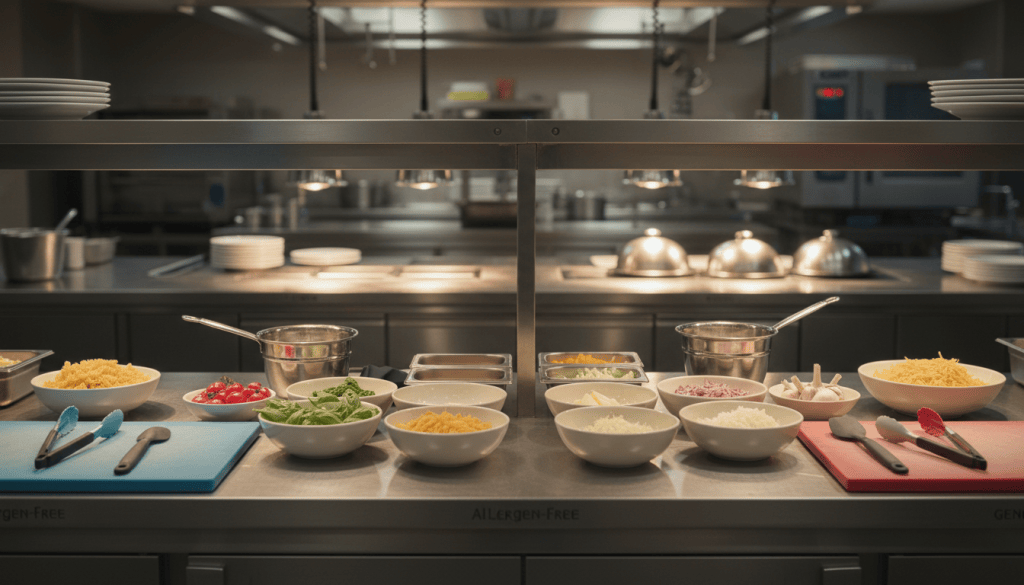
A food allergy can change the entire rhythm of restaurant service. A diner tells the server about an ingredient they cannot eat; the message must reach the chef; a dish must be checked, prepared, finished and delivered without accidental exposure. In a busy hotel, that path may run through several kitchen stations and dining-room staff members.
So how do hotel kitchens prevent allergen cross-contact? The answer is not one special utensil or an impressive promise on a menu. It is a coordinated process: reliable ingredient information, careful communication, controlled preparation, clean equipment and protection of the meal all the way to the guest.
What does allergen cross-contact actually mean?
Cross-contact occurs when an allergenic food protein is unintentionally transferred to a food that should not contain it. A shared knife, a container of garnish, splashes from a common cooking surface or a serving utensil can create that transfer. The amount may be impossible to see. For someone with a food allergy, a visually perfect plate is not proof that it is suitable.
Cross-contact is often called cross-contamination in everyday conversation, but the distinction matters: allergen proteins are not bacteria, and simply cooking a dish or removing a visible ingredient does not reliably eliminate the risk. Food Allergy Research & Education explains why cleaning and dedicated equipment are central to prevention.
1. Make the allergy request unambiguous
The first checkpoint is communication. A server needs to hear which food or ingredients are a concern, whether the guest has a diagnosed allergy, and which menu choices are being considered. The information should be relayed accurately to the person responsible for preparing the dish. Vague instructions such as “no nuts, please” written without a clear procedure can create uncertainty when several people handle the order.
In a well-managed service, the kitchen confirms what it can and cannot accommodate instead of improvising. A manager or chef should be involved when an answer is unclear. If reliable ingredient information or safe preparation conditions are unavailable, staff should say so rather than offer a guarantee they cannot support.
2. Check every component, not just the named dish
Allergen awareness begins before the pan is heated. A complete ingredient check includes sauces, stocks, pastry bases, dressings, marinades, purchased garnishes, cooking oils and replacement ingredients. A cook may know the main recipe but overlook a pre-made component whose formulation has changed.
Hotels also depend on suppliers. Packaging, delivery substitutions and up-to-date recipe records therefore matter. A seasonal kitchen that changes its menu in response to weather or availability needs a reliable way to recheck the allergen information for each replacement. Good documentation is practical information, not simply paperwork.
3. Create a controlled preparation space
A dedicated preparation area and utensils can reduce opportunities for unwanted transfer. Where separate space is not feasible, an effective cleaning process is essential before work begins. That means washing and cleaning the relevant surfaces and equipment appropriately—not merely brushing crumbs away or wiping a knife with a dry cloth.
The US Centers for Disease Control and Prevention identifies staff training, accurate ingredient lists, separation where possible, and thorough cleaning as important practices. The specific procedures must suit the restaurant’s equipment and applicable food-safety requirements; no image of a spotless kitchen can replace those checks.
4. Watch shared tools, cooking media and last-minute additions
The most obvious danger is sometimes the least interesting one. If a chef is deliberately cooking without a particular allergen, attention is already focused on that ingredient. More easily missed are the ordinary objects moving around the kitchen: shared tongs, storage containers, worktops, fryers, grill surfaces, spoons used for tasting, and decorative toppings kept close to other preparations.
Finishing touches deserve special scrutiny. A garnish might be added at a separate station, by a different cook or during final presentation. Creams, nut-based elements and pastry decorations may contain allergens even when the main dish does not. A safe workflow treats the entire plate as one controlled preparation, including its final visual flourish.
5. Keep the plate protected after it leaves the pass
Hotel dining rooms introduce another handover. The kitchen pass connects cooks to servers, runners and sometimes a separate event team. Clear identification of an allergy order matters at this stage, as do protection from overlapping plates, shared serving implements and unapproved changes during delivery.
A useful service rule is simple: if a question arises about the dish, stop and check rather than guessing. Staff should never quietly remove an unwanted ingredient from a completed plate and assume the rest is safe. The goal is continuity of responsibility from the first allergy conversation to the moment the meal reaches the table.
6. Train the team and make the process repeatable
A hotel’s approach must survive busy evenings, new employees, substitutions and last-minute banquet changes. Training should explain not just which foods are common allergens, but who has authority to confirm a request, where ingredient information is kept, when a dish must be remade, and how staff respond to an allergic emergency according to local protocols.
Written recipes, communication procedures and a documented escalation route support consistency. The UK Food Standards Agency’s allergen guidance for food businesses highlights cleaning, separation and verification within a broader food safety system. A strong system is designed to catch mistakes before they reach guests.
Why this makes such a strong culinary mystery
In a restaurant story, professional routines can also create an evidence trail. A preparation record establishes what should have been made. A service route suggests who could have handled a dish. A photograph may show a detail that differs from the chef’s account. The same checkpoints that matter for real-world safety can become fair-play clues in fiction—without treating allergies themselves as entertainment.
In The Wrong Garnish at the Marivelle Pass, Book 1 of Secrets on the Marivelle Pass, executive chef Sophie Delacourt faces a crisis after a guest with a severe tree-nut allergy dies following a private tasting. The plate returned to her kitchen carries a garnish she never approved. The fictional mystery uses kitchen expertise, service timing and hotel records to raise questions about the path from chef to guest, without making the article’s real-world guidance depend on the plot.
Readers interested in how routine food science can become a clue can also explore how food science becomes evidence in culinary cozy mysteries and how food provenance can support a fair-play investigation.
What can a diner ask before ordering?
Practical questions include: Can the kitchen check the full ingredient list? Is a separate preparation space or appropriate cleaning procedure available? Are cooking surfaces and utensils shared? Who will verify and deliver the finished meal? Asking does not guarantee a safe outcome, but it helps reveal whether the establishment has an actual procedure rather than a reassuring phrase.
Ultimately, the safest answer may sometimes be that a kitchen cannot accommodate a particular allergy. Clear limits protect trust. Grand hospitality is not the ability to promise anything; it is the discipline to know what is being served, how it was handled, and when to say no.
Further reading: FARE: Avoiding Cross-Contact and CDC: Food Allergy Reactions in Restaurants. This article offers general food-service information, not individualized medical advice.
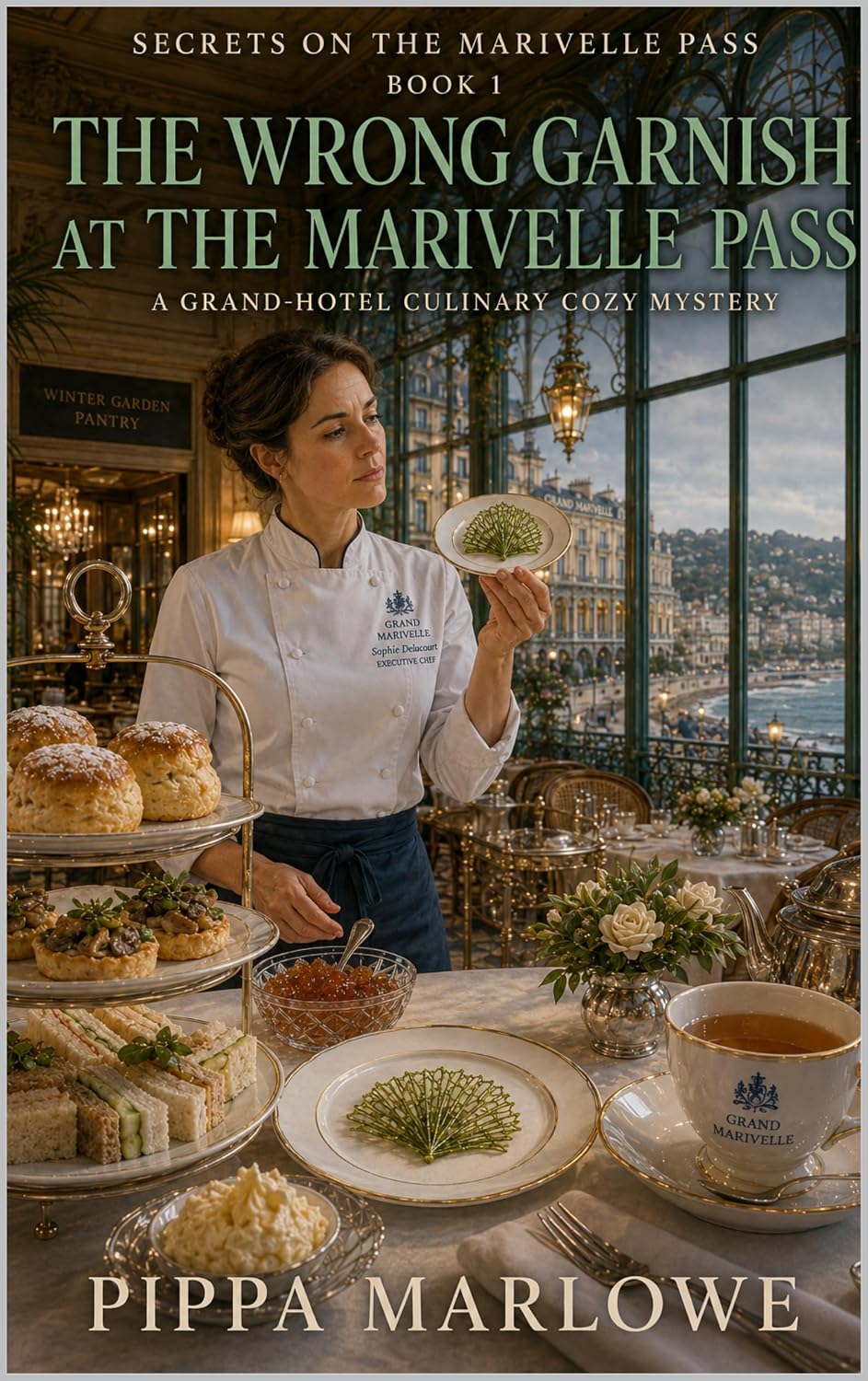
Discover The Wrong Garnish at the Marivelle Pass
At the Grand Marivelle, chef Sophie Delacourt must account for a garnish she never approved. Explore the first mystery in Secrets on the Marivelle Pass.

