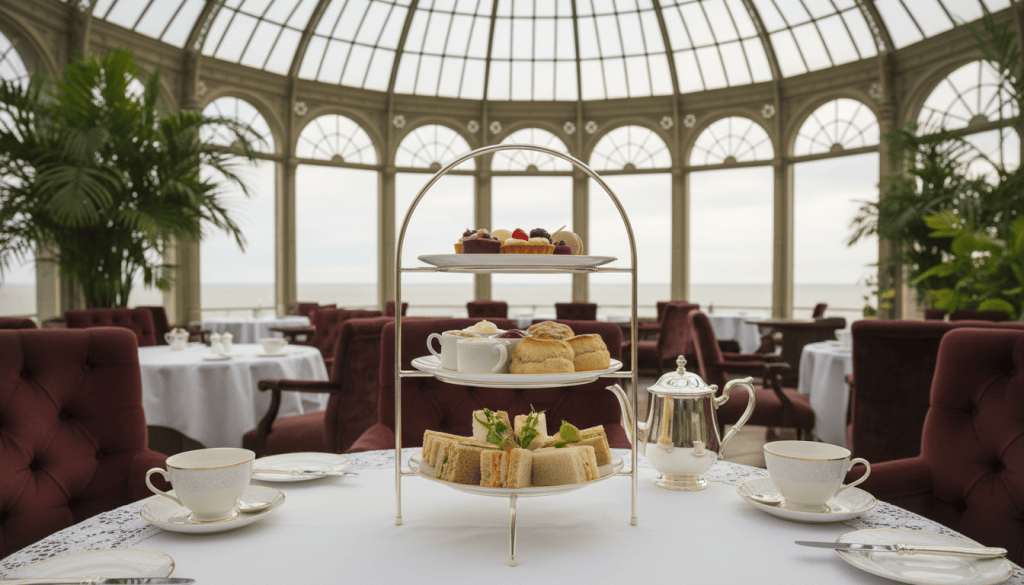
A grand-hotel afternoon tea appears effortless: polished silver, warm scones, delicate sandwiches, miniature cakes and a pot poured at exactly the right moment. Yet that sense of ease is one of hospitality’s most carefully produced illusions. Behind a serene tearoom, pastry chefs, kitchen porters and front-of-house staff are working to a clock.
Understanding how afternoon tea is made reveals why it remains a distinctive form of hotel service. The experience is not simply a plate of small desserts. It is a sequence of preparation, holding, finishing, presentation and attentive table service in which timing and texture matter as much as beautiful china.
From fashionable refreshment to a hotel ritual
Afternoon tea developed from earlier customs of enjoying tea with food. Anna, Duchess of Bedford, is widely associated with popularizing the social occasion in the nineteenth century, although tea with bread, cakes and other refreshments had a longer history. The familiar contemporary hotel version—small savory bites, scones, sweets and a choice of teas—is a curated experience rather than an unchanging historical formula.
Hotels adapt the experience to their kitchens, guests, season and setting. A winter service might offer warming flavors and an intimate atmosphere; a summer menu could emphasize berries, citrus and lighter pastries. The essential promise remains the same: a leisurely pause in surroundings designed for conversation.
What guests see—and what they do not
A classic stand often presents savory sandwiches, scones and pastries on separate tiers, though hotels vary the order and presentation. Guests see matching portions, clean edges, coordinated colors and food arriving in excellent condition. The team backstage sees dozens of small jobs that must converge within a short service window.
Sandwiches cannot be assembled so early that they dry out or turn soggy. Fresh baked goods cannot wait indefinitely. Certain pastries must remain chilled until service. The right tea must accompany the correct guest. These tasks look simple individually, but their coordination determines whether afternoon tea feels relaxed.
Planning backwards from the first reservation
The timetable begins long before anyone enters the tearoom. Some pastry elements—baked shells, fillings, preserves and decorative components—can be prepared in advance if handled and stored appropriately. Other items need finishing close to service. Production teams plan backwards from reservations, expected covers and the number of portions needed.
The hotel may also be arranging birthday requests, dietary accommodations, table settings and floral displays. A larger booking does not merely multiply the number of cakes. It increases the need for consistent quality, replenishment and accurate communication between the kitchen and dining room.
Why finger sandwiches need such precision
The best finger sandwiches balance tender bread, suitable fillings and a clean finish. Bread dries when exposed; very moist fillings may soften it from within. Filling distribution must remain even, and the narrow shape leaves little room to hide inconsistent cutting. A row of neat sandwiches is evidence of attentive preparation.
Kitchen teams may prepare fillings in advance but assemble sandwiches closer to service, depending on ingredients and operating procedures. Finished pieces must be covered and stored safely until needed. Smoked fish, cucumber and egg fillings each bring different moisture and temperature considerations.
For guests, the sandwiches are a small opening course. For kitchen staff, they represent the challenge of keeping ingredients appealing while delivering the same standard to many tables.
Scones run on a different clock
Scones provide a welcome contrast to cool savory bites and delicate pastries. Their charm depends partly on a tender crumb and freshness, so the baking timetable matters. Hotels vary in when they bake and how they present them, but the operational question is constant: how can every sitting receive a pleasant product rather than something that has waited too long?
Jam, cream, butter and serving spoons create their own preparation and replenishment tasks. They must be presented cleanly, with accurate information about ingredients and appropriate handling. Guests may debate which topping comes first; the kitchen has more immediate concerns about quality, consistency and timely delivery.
Building a balanced pastry tier
Small pastries are visually demanding. Glossy glazes, neat layers, fruit placement and piped creams are all more noticeable when the portion is tiny. Variety also matters. A selection of only rich, sweet chocolate desserts can feel heavy; contrasting textures, citrus notes or fruit can produce a more satisfying progression.
But a pastry must do more than look impressive. It must withstand plating, movement from kitchen to tearoom and the time before the guest eats it. Delicate decorations, soft fillings and crisp components behave differently in humidity and warmth. The pastry chef balances artistic ambition with food safety, stability and repeatable production.
Choosing and serving the tea
The beverage is not an afterthought. Black, green and herbal infusions have different flavors and preparation recommendations, and hotels may offer a carefully selected menu. Staff should know the house choices well enough to guide guests without turning a pleasant decision into a lecture.
Water quality, clean teapots, suitable steeping guidance and timely refills all affect the experience. A brisk breakfast-style tea may suit one guest; a lighter floral infusion another. When staff describe the options clearly, the experience becomes welcoming to newcomers as well as enthusiasts.
The dining room supplies the final choreography
Reservation timing, table setting, arrivals, pouring and clearing belong to the front-of-house team, but they depend on ongoing communication with the kitchen. Servers must know when stands are ready, which items have changed, what dietary information needs confirming and how to explain the menu without interrupting conversation.
An elegant room creates practical obstacles. A silver stand must reach a small table safely; teapots must be poured without disrupting neighboring guests. Staff watch for missing implements, cooling tea or food that has been waiting too long. Ideally the service feels quiet and unhurried because so much planning happened beforehand.
Why the winter-garden setting matters
A glass-roofed tearoom, leafy plants, afternoon light and a view of rain or the sea can turn a simple refreshment into an occasion. The menu gives afternoon tea its structure, but architecture, acoustics and the rhythm of service shape the memory. Grand hotels are especially good at creating a sense of occasion without asking guests to rush.
Their public rooms also conceal complicated working systems. As the Wonder Shelf Books article Why Grand Hotels Make Such Rich Settings for Cozy Mysteries explains, the contrast between graceful public spaces and busy service corridors makes hotels compelling settings for fiction.
Inside the fictional Grand Marivelle
In Pippa Marlowe’s The Wrong Garnish at the Marivelle Pass, executive chef Sophie Delacourt works in the Grand Marivelle above fictional coastal Merehaven. Its glass-roofed Winter Garden tearoom is part of the same intricate workplace as L’Orangerie, the hotel’s fine-dining restaurant. Winter weather, regional produce and the rhythms of service make the hotel feel like a working community rather than a picturesque backdrop.
The book begins the Secrets on the Marivelle Pass series, in which routine kitchen practices and hotel logistics can become clues. Readers curious about the staff perspective can also explore Behind the Grand Marivelle: How Hotel Staff Spot the Clues Guests Miss or find more stories on Pippa Marlowe’s author page.
What to notice at your next afternoon tea
Look for freshness in the sandwiches, the condition of the scones, the balance of the pastry selection, sensible tea recommendations and unobtrusive coordination between staff. The best service makes its complexity almost invisible. Once you understand how much preparation supports those leisurely hours, even a perfectly placed teaspoon becomes a small sign of the work behind the experience.
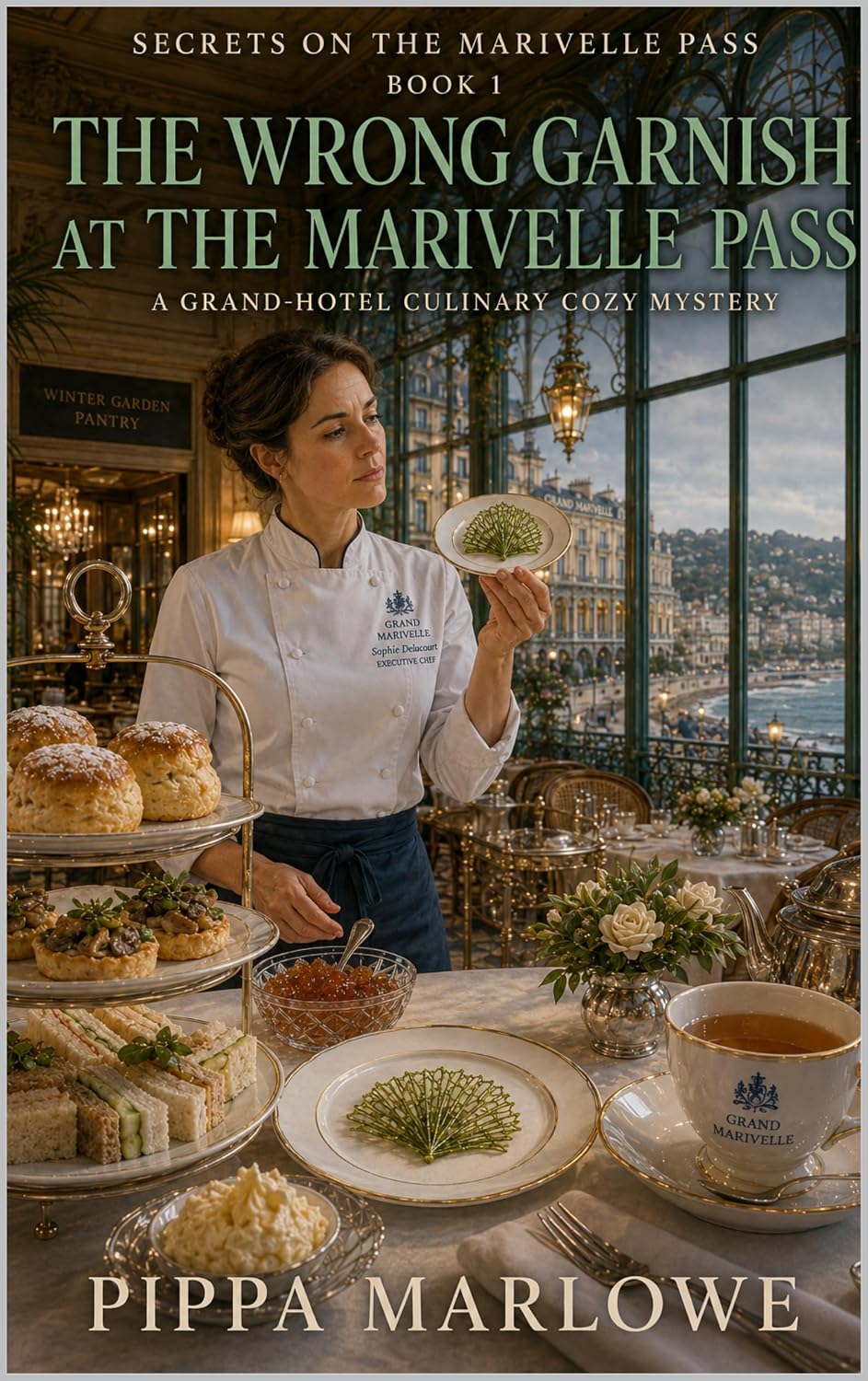
Discover The Wrong Garnish at the Marivelle Pass
At the Grand Marivelle, chef Sophie Delacourt must account for a garnish she never approved. Explore the first mystery in Secrets on the Marivelle Pass.

