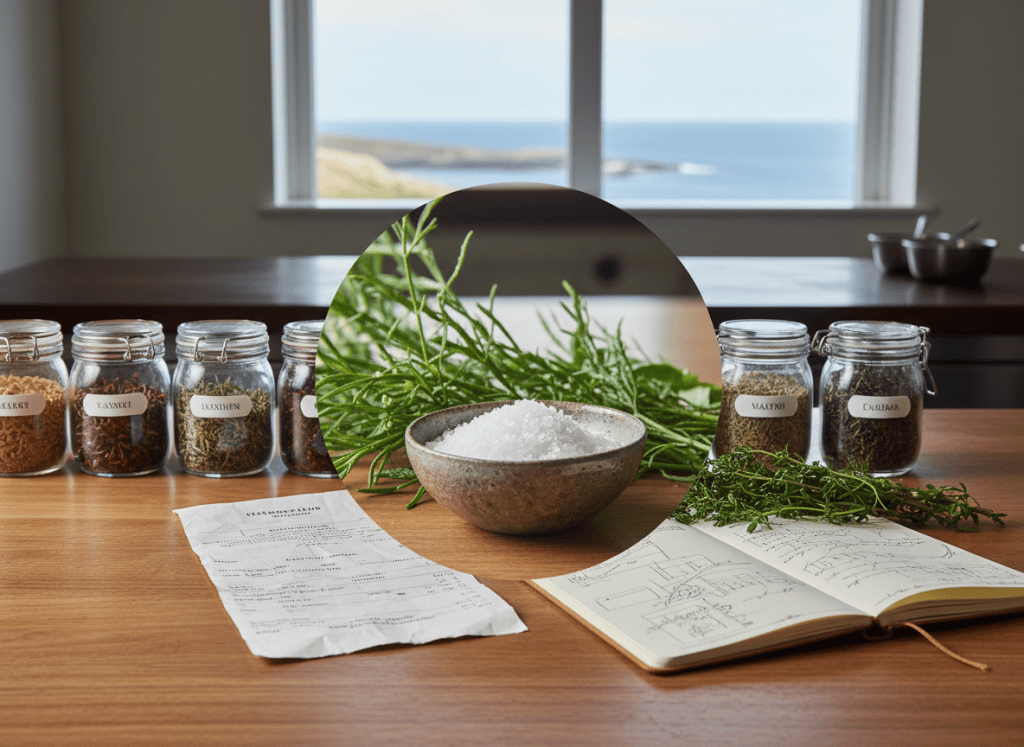
Food provenance sounds technical, but in a mystery it can be remarkably human. At its simplest, provenance is the story of where an ingredient came from, who supplied it, how it was handled, and whether the account of that journey can be trusted. In a culinary cozy mystery, that chain can do much more than decorate the setting. It can become evidence.
That makes provenance especially useful for clue-driven fiction. A reader does not need to be a chef to understand that a herb came from one supplier, a shipment arrived at a particular time, or a product could only have been harvested under certain conditions. The professional detail gives the sleuth something concrete to test while still leaving room for misdirection, conflicting testimony, and ordinary human error.
What food provenance means inside a mystery
In everyday food culture, provenance can involve origin, producer, location, method, handling, and the path from source to plate. In fiction, each part of that path can create a question. Was this ingredient really supplied by the person named on the invoice? Did it arrive when someone says it did? Could it have come from the claimed location? Was the item served to the victim the same item recorded in the kitchen?
Those questions are small enough to feel plausible and specific, but together they can reshape an investigation. Instead of relying only on fingerprints, overheard confessions, or dramatic confrontations, the sleuth can work through the practical logic of a food system. The mystery becomes partly about reconstructing a chain of custody in a setting where ingredients are constantly moving through hands, rooms, refrigerators, storerooms, delivery entrances, and dining spaces.
Why provenance creates fair-play clues
Fair-play mystery clues work best when readers have enough information to notice that something does not fit, even if they do not immediately know why. Provenance naturally produces that kind of structure because it depends on relationships between facts.
A delivery time can conflict with a witness statement. A supplier record can contradict a rumor. A label can identify an ingredient more precisely than a casual observer would. A harvesting claim can fail because the physical conditions were wrong. None of these clues has to announce itself as important. Their value comes from comparison.
This is one reason culinary mysteries can reward attentive reading without turning every meal into a forensic lecture. The reader can follow the visible facts while the protagonist, because of professional experience, recognizes which discrepancy deserves a second look.
Suppliers, kitchens, and service systems create natural tension
Food rarely reaches a dining room through one person. A restaurant or hotel may depend on growers, foragers, fishermen, specialist producers, delivery drivers, purchasing staff, chefs, servers, and managers. That network gives a mystery writer a believable group of people who know different parts of the same story.
It also creates reputational stakes that suit the cozy form. A disputed ingredient does not only threaten one suspect. It can damage a supplier’s livelihood, a chef’s judgment, a hotel’s standing, or the trust between a business and its local community. The investigation can therefore matter deeply without requiring constant physical danger.
The most interesting conflicts often come from partial knowledge. A chef may know what entered the kitchen. A buyer may know what was ordered. A producer may know what was harvested. A server may know what reached the table. Each person can be telling the truth about one part while still missing the larger pattern.
Paper trails can be as revealing as physical evidence
Invoices, delivery records, purchase orders, supplier notes, access logs, reservation details, and tasting schedules can all become clue systems. Used well, they do not feel like paperwork inserted for its own sake. They give the reader a way to test stories against time, quantity, location, and responsibility.
A record is especially useful when it looks ordinary. The interesting question may not be what the document says, but what it proves could or could not have happened. A missing delivery is one kind of clue; an entirely normal delivery that makes someone’s explanation impossible is another.
Geography can become part of the evidence
Provenance becomes even stronger when the food is closely tied to place. Coastal ingredients, wild herbs, shellfish, salt, orchard fruit, or seasonal produce carry practical limits. They come from particular environments and are gathered, processed, or delivered under particular conditions.
In a coastal mystery, a tide table can matter because access to a shoreline changes. In a foraging plot, plant identification and growing location can matter. In a hotel kitchen, the distance between supplier, receiving area, storeroom, and dining room can matter. The setting stops being a painted backdrop and becomes part of the logic of the case.
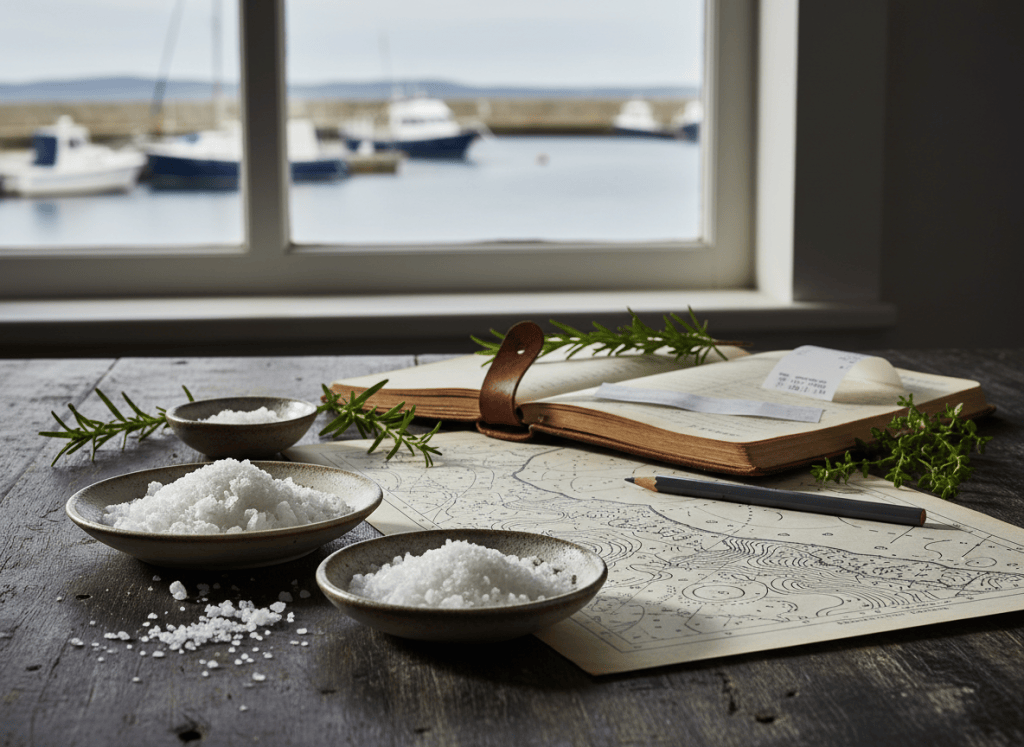
Professional expertise should narrow the puzzle, not solve it by magic
A specialist protagonist is most convincing when expertise gives them a reason to notice something other people overlook, rather than an all-purpose answer to every question. A chef may recognize an ingredient, understand kitchen workflow, or know whether a supplier’s claim makes sense. That knowledge should open a door to investigation, not close the case instantly.
This balance is important for readers who enjoy workplace mysteries. The pleasure comes from seeing professional knowledge used precisely. The protagonist is capable because she understands her environment, but she still has to compare evidence, question assumptions, and deal with people whose motives cannot be read from a label.
A spoiler-free example from the Grand Marivelle
The Salt House Secret at Marivelle by Pippa Marlowe, Book 3 in Secrets on the Marivelle Pass, uses this kind of clue structure around Executive Chef Sophie Delacourt. A food writer dies after a hotel press event and an undisclosed private tasting, while suspicion begins to gather around a supposedly unsafe foraged herb.
The investigation moves through ingredient identification, supplier documentation, artisan salt, tidal harvesting conditions, invoices, delivery records, and access information. The point is not that food knowledge replaces detective work. It gives Sophie a professional framework for asking better questions about what was actually served, where it came from, and whether the story surrounding it is physically possible.
The same series also shows why hospitality itself can generate strong mystery structures. See why grand hotels work so well as cozy mystery settings.
Why this clue style appeals to cozy mystery readers
Food provenance works particularly well for readers who prefer puzzles built from observation and practical knowledge rather than graphic violence. It supports a warm or atmospheric setting while still giving the mystery firm structure. It also creates room for community relationships because the supply chain is made of people whose work depends on trust.
For readers, the satisfaction comes from seeing ordinary details acquire meaning. A jar, invoice, delivery time, harvest condition, or tasting list can sit quietly in the background until a later comparison changes its significance. That is exactly the kind of clue that makes a culinary cozy mystery feel both specialized and fair.

