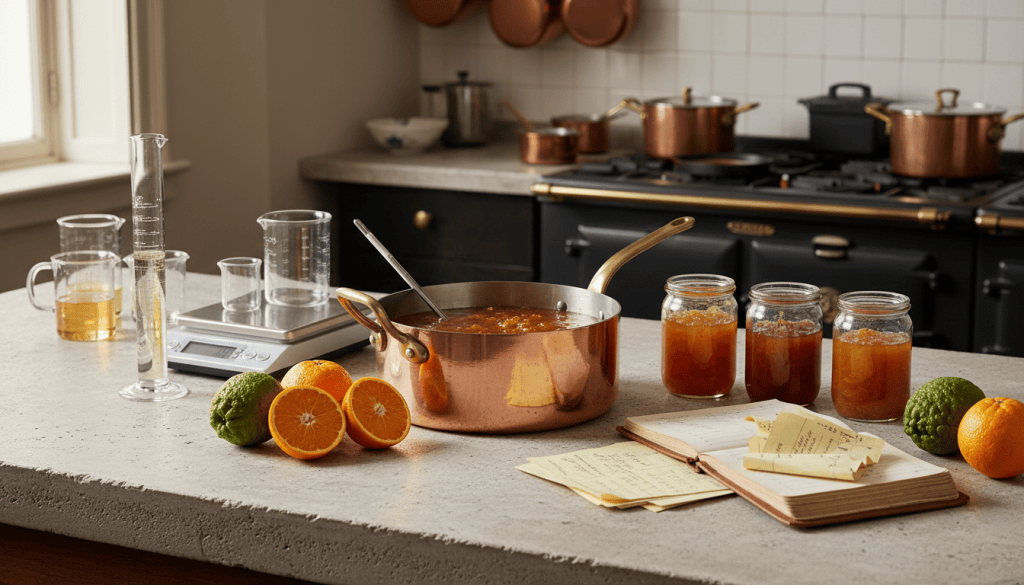
Food science gives culinary mysteries a useful kind of evidence: ordinary kitchen details can be tested. A preserve can set too firmly, a batch can differ from another, a production time can conflict with a witness statement, or a receiving record can show that an ingredient could not have been in the kitchen when someone claims it was. The clue is not dramatic because it is scientific. It is effective because it connects a physical result to a process.
That makes food science especially well suited to fair-play cozy mysteries. Readers can see the same jars, records, temperatures, ingredients, and routines as the sleuth. Professional knowledge helps the protagonist interpret them, but the evidence remains grounded in things that can be compared.
Food can carry physical information
Cooking changes ingredients in repeatable ways. Heat affects texture. Sugar concentration influences preserves. Acidity matters to flavor and structure. Time affects whether a mixture reaches the expected consistency. A finished food therefore contains traces of the process that produced it.
In a mystery, that means the finished dish or preserve can contradict the story told about it. If two jars are supposed to come from the same batch but behave differently, the difference deserves attention. If a kitchen record says a preserve was made at one time while its physical characteristics point toward another process or batch, the discrepancy can become evidence rather than decoration.
Why marmalade is such a useful fictional clue system
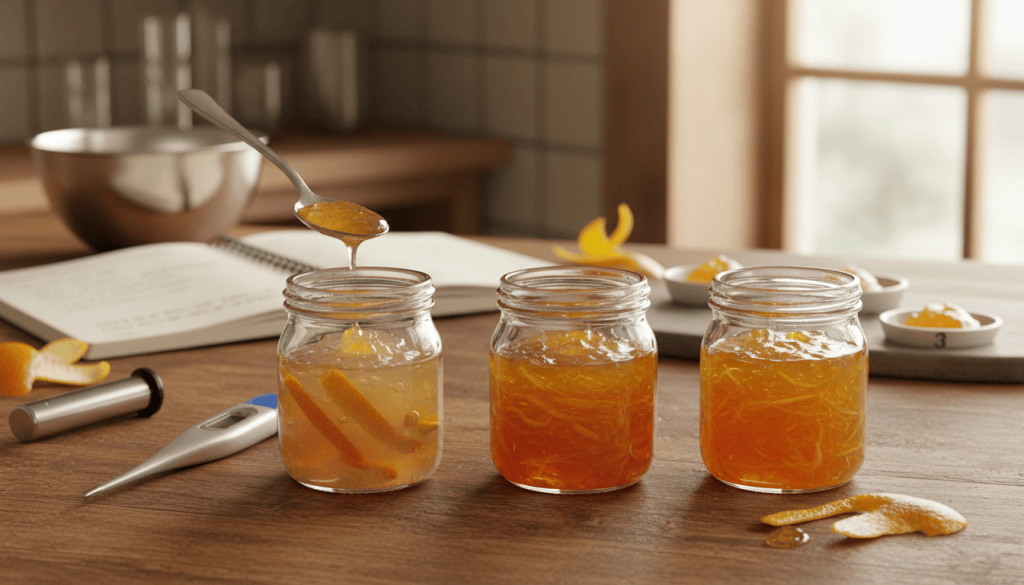
Marmalade is particularly rich material for a clue-driven story because its identity is not limited to flavor. Peel thickness, clarity, set, bitterness, fruit preparation, cooking time, sugar concentration, and batch handling can all create observable differences. The cook who made it may recognize those differences in a way an outsider would not.
This does not require a mystery to become a technical manual. The strongest use of food science is selective. A protagonist notices one inconsistency, explains only what the reader needs, and then asks what that inconsistency means for the timeline, the source of the food, or the person who handled it.
Batch records turn kitchen work into a timeline
Professional kitchens depend on sequence. Ingredients arrive, are logged, stored, prepared, cooked, cooled, labeled, transferred, and served. Even when the paperwork is simple, it creates a chronology. A batch sheet, receiving note, preparation record, or supplier entry can establish when something should have existed and who had reason to handle it.
That chronology is useful because cozy mysteries often depend less on spectacular forensic evidence than on small contradictions. A delivery may arrive later than claimed. A batch number may not match the day it was supposedly made. A preparation room may have been accessible only during a narrow service window. Each fact can look mundane on its own while becoming decisive when compared with the others.
Records matter because kitchens are systems
A hotel kitchen is not one cook and one recipe. It is a working system involving purchasing, receiving, storage, prep stations, pastry work, service, events, cleaning, and coordination with other hotel departments. That complexity gives a mystery writer many plausible sources of information without inventing a separate detective apparatus.
Receiving documents can show what entered the building. Production notes can show what was made. Access systems can show who could enter a room. Event schedules can narrow the time available. Historical recipe files can reveal how current practice differs from older tradition. The clues become stronger because they belong naturally to the workplace.
Professional expertise should guide the investigation, not solve it instantly
A chef-sleuth is most convincing when expertise helps her recognize a question that another character might miss. She may know that two preserves should not look different, that a claimed preparation time is implausible, or that a record does not fit normal kitchen procedure. But expertise should not function like magic. The observation still has to be tested against documents, timing, access, and human motives.
This balance is one reason professional mysteries can be satisfying. Readers see competence in action without losing the puzzle. The protagonist’s knowledge narrows possibilities, while the solution still depends on interpretation, comparison, and conversation.
A spoiler-free example from The Marmalade Ledger at Marivelle
Pippa Marlowe’s The Marmalade Ledger at Marivelle, Book 2 of Secrets on the Marivelle Pass, uses this kind of clue structure around Executive Chef Sophie Delacourt. The fictional Grand Marivelle is preparing for Merehaven’s Citrus and Conserves Festival when a reconstruction of a 1904 bitter-orange savarin exposes gaps in the hotel’s culinary records.
Festival treasurer Gareth Morrow believes an old ledger may reveal that local producers played a larger role in the hotel’s food history than the official story suggests. Before he can show Sophie what he found, he is discovered dead in a self-latching festival preparation room, while the ledger and his folder are missing.
Without revealing the resolution, the investigation makes practical use of marmalade batches, set, soluble-solids measurements, production timing, receiving documentation, historic supplier records, and hotel access. Sophie’s culinary knowledge matters because she can tell when an apparently ordinary food detail does not fit the process that should have produced it.
Why this clue style works for cozy mystery readers
Food-science clues support a mystery that can remain non-graphic while still feeling rigorous. They reward attention to objects and routines that are already part of the setting. They also fit community-centered stories because food production connects chefs, suppliers, festival organizers, local businesses, and hotel staff.
For readers who enjoy capable female sleuths, professional workplace detail, documentary clues, historic records, and mysteries where observation matters more than violence, this approach creates a distinct reading experience. It allows the story to be warm and atmospheric without making the puzzle soft.
The kitchen becomes an evidence room without ceasing to be a kitchen
The most effective culinary mysteries do not bolt science onto the plot. They let the kitchen generate evidence through the work already happening there. A jar of marmalade, a delivery entry, a recipe reconstruction, or a batch log can matter because each belongs to a chain of real decisions.
That is also what makes the Grand Marivelle useful as a recurring mystery world. Its kitchens, archives, suppliers, service areas, and community events give Sophie Delacourt a professional environment full of things that can be checked. Readers can explore the wider fictional series on the Secrets on the Marivelle Pass page or visit the Pippa Marlowe author page.
For a complementary look at the setting around these clue systems, see why grand hotels make such rich settings for cozy mysteries.

