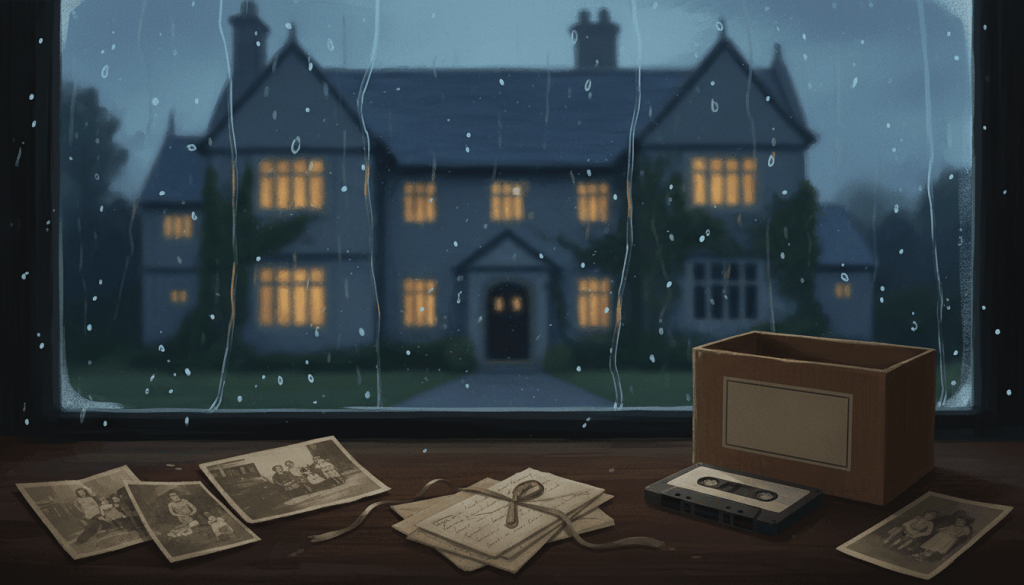
Family secrets work especially well in psychological thrillers because they make the danger personal. The threat is not only that someone has lied, hidden evidence, or protected a reputation. It is that the protagonist may have built an entire understanding of childhood, family, or identity on information controlled by other people.
That structure changes the nature of suspense. Instead of asking only “What happened?”, the reader also asks “Who had the power to define what happened?” and “What if the protagonist’s own memories are incomplete?” When those questions are combined with documents, photographs, rooms, household objects, and conflicting family accounts, memory itself can become part of the investigation.
Why family secrets create psychological tension
A hidden family fact has unusual dramatic power because it can alter the meaning of events that seemed ordinary. A photograph may stop being sentimental and become evidence. A parent’s silence may look less like reserve and more like control. A childhood anecdote repeated for years may turn out to be only one person’s version of the past.
Psychological thrillers often build suspense through this reinterpretation. The story does not need constant physical danger if every new discovery forces the protagonist to reassess a relationship, a memory, or a supposedly settled fact. The emotional stakes rise because the investigation reaches backward into the character’s sense of self.
This is particularly effective in stories about wealthy or tightly controlled families. Money, reputation, property, private medical care, staff, legal advisers, and inherited institutions can all give a family more ways to preserve one official narrative. The larger the structure around the family, the more credible it becomes that secrets might survive for years.
Fragmented memory is different from simple amnesia
Fragmented memory does not require a protagonist who remembers nothing. In many psychological thrillers, the more unsettling approach is partial memory: isolated images, sensory impressions, routines, phrases, or objects that feel familiar without immediately forming a complete explanation.
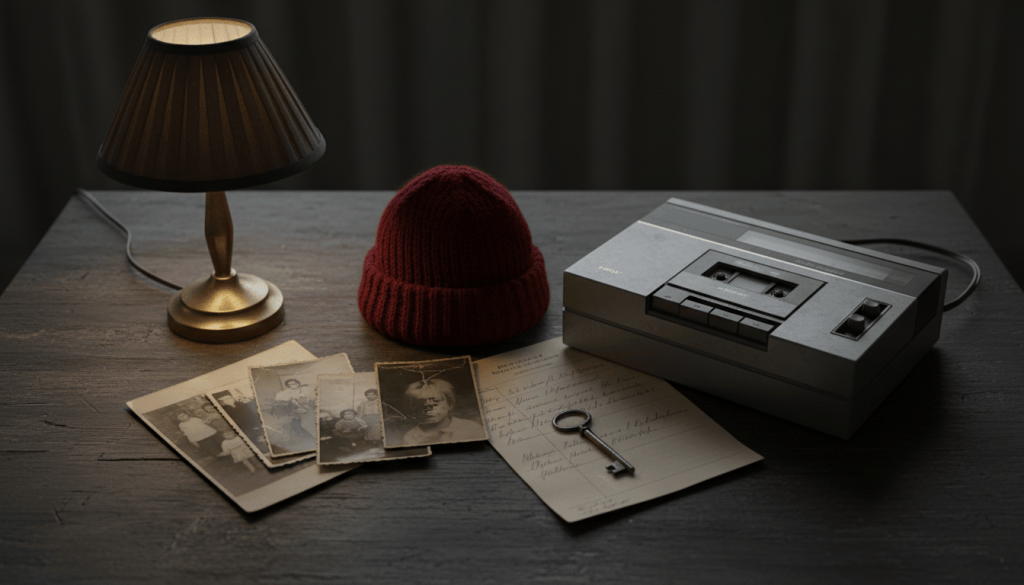
A smell, a piece of clothing, a room, a song, or the arrangement of a table can trigger recognition before conscious explanation arrives. That gives the writer two tracks of information at once: what the protagonist can state with confidence, and what the body or senses seem to recognize.
The effect is strongest when the story treats memory carefully. A fragment is not automatically proof. It may be accurate but incomplete, emotionally distorted, misunderstood, or attached to the wrong explanation. Suspense develops as memories are tested against external evidence rather than accepted at face value.
Documents can challenge the family’s official story
One reason archival clues are so useful in this kind of thriller is that they create friction between private memory and recorded fact. Wills, letters, medical records, photographs, labels, amended documents, recordings, and household files can preserve information after the people involved have chosen silence.
These clues are not automatically neutral. A record can be altered. A photograph can be mislabeled. A letter can omit context. A recording can contain one person’s carefully chosen version of events. The important question is not simply whether a document exists, but who created it, when, for what purpose, and who controlled access to it.
That is why document-driven suspense can feel investigative without becoming a conventional police procedural. The protagonist may be working through family archives, private papers, old photographs, property records, or medical files rather than interviewing suspects in an official inquiry.
Objects and rooms can function as evidence
Psychological suspense often becomes more immersive when clues are embedded in domestic space. A locked room, preserved nursery, hidden cellar archive, old suitcase, labeled photograph, or object kept long after its apparent usefulness can carry information that characters have refused to discuss openly.
The setting therefore becomes more than atmosphere. A house can act as a physical map of what a family displays, what it stores, what it locks away, and what it cannot quite bring itself to destroy. In country-house or old-estate thrillers, architecture can reinforce themes of inheritance and control because generations of history occupy the same physical place.
The strongest stories keep identity at the center
The most compelling family-secret thrillers are rarely interesting only because a secret exists. They matter because disclosure changes a living person’s choices. If a protagonist discovers that a parent lied, records were altered, or another family was hidden, the question becomes what that knowledge does to trust, loyalty, grief, and identity.
That is the terrain explored in The Other Beneficiary by Lenora Valerood, Book 1 of The Ashbourne Inheritance. The story begins with a contested inheritance and moves into Clara Ashbourne’s investigation of photographs, records, letters, preserved objects, hidden archives, and fragments of childhood memory. The emphasis is psychological rather than action-heavy: each discovery changes what Clara believes she knows about her family and herself.
Why this approach appeals to psychological-thriller readers
Readers drawn to this type of suspense often want a puzzle that is emotional as well as factual. They are not only waiting for information to be revealed. They are watching relationships change under the pressure of that information.
Family secrets and fragmented memory are effective because they allow the investigation to operate on several levels at once: the protagonist searches for evidence, tests competing accounts, revisits childhood, and decides which relationships can survive the truth. The result can be dark and claustrophobic without relying on graphic violence or constant action.
For readers who prefer atmospheric psychological suspense, domestic evidence, old family houses, morally complicated relatives, and gradual revelations, this structure offers a particularly strong form of tension: the possibility that the past has not disappeared at all—it has simply been organized by someone else.
For a related look at how legal documents and family wealth can trigger the same kind of uncertainty, see Why Inheritance Disputes Make Such Powerful Psychological Thriller Setups.

