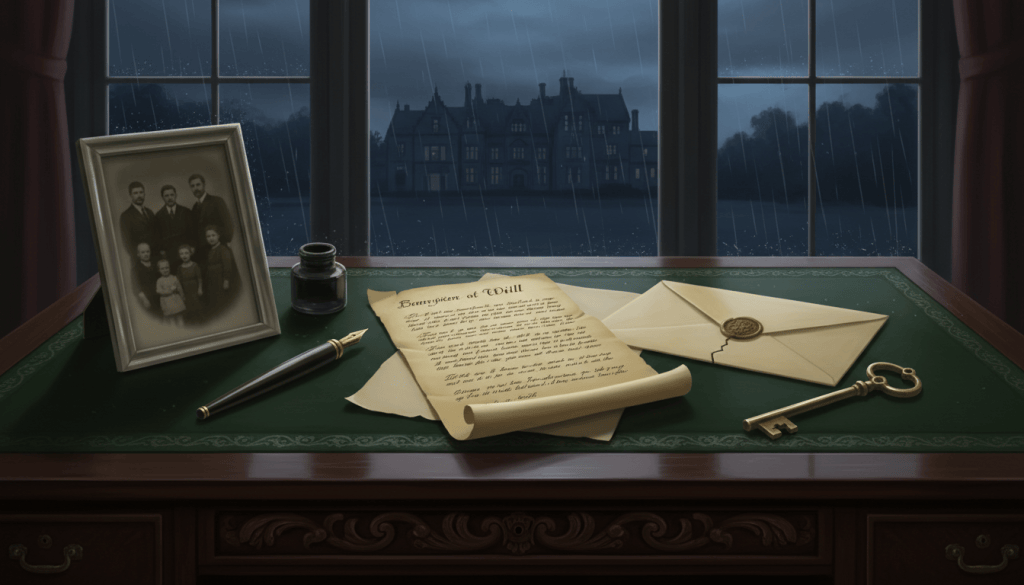
Inheritance disputes are unusually effective foundations for psychological thrillers because they combine money, grief, family history, and power in a single event. A will can force relatives into the same room, expose unequal loyalties, revive old resentments, and reveal relationships that were never meant to become public.
The legal document may be straightforward, but its emotional consequences rarely are. When a beneficiary appears unexpectedly, when one branch of a family receives more than another, or when property is divided in a way that contradicts everything the heirs believed, the inheritance becomes more than a financial question. It becomes evidence that someone understood the family differently from everyone else.
A will can overturn the family’s accepted story
Psychological thrillers thrive on destabilization. The protagonist begins with a set of assumptions about parents, siblings, marriage, childhood, or family loyalty. An inheritance dispute can challenge all of them at once because a will is a final act of decision-making by someone who can no longer be questioned directly.
That absence matters. The deceased person has created consequences without remaining available to explain motive. Surviving relatives are left to interpret wording, timing, omissions, and unusual bequests. Every explanation is filtered through people who may have their own interests to protect.
This produces a strong psychological setup: the document appears authoritative, yet the meaning behind it is uncertain. A beneficiary may be legitimate but unknown. A supposedly unfair division may reflect guilt, responsibility, secrecy, or an attempt to correct an earlier wrong. The reader is invited to question not only who receives what, but why.
Money makes hidden loyalties visible
Family affection can remain ambiguous for years. Inheritance places a number, property, or named possession beside those relationships. That can make people behave differently because private assumptions suddenly have measurable consequences.
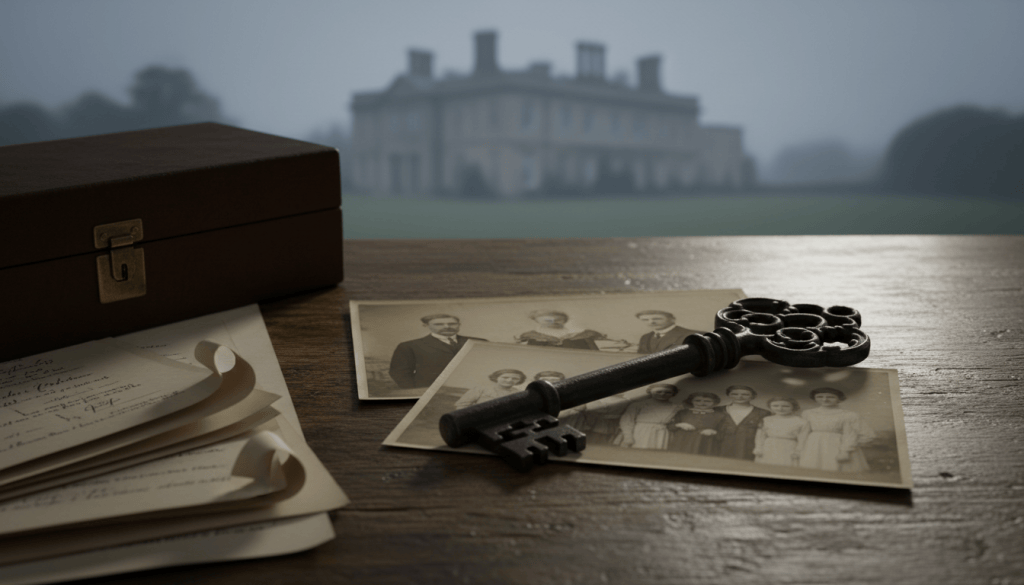
A character who insists that money does not matter may still feel betrayed by exclusion. A sibling may become suspicious because another relative knew about a clause in advance. A surviving spouse may interpret an unexpected beneficiary as proof of emotional disloyalty. Even when the estate is large enough that no one faces immediate hardship, the distribution can function as a symbolic judgment on the family.
For thriller writers, that symbolic weight is useful because it turns financial conflict into psychological conflict. The estate becomes a record of preference, guilt, obligation, or concealment.
An unexpected beneficiary creates instant questions
The arrival of an unknown or barely known beneficiary is one of the strongest variations on the inheritance setup. It immediately creates several possible explanations without requiring a crime to occur. Was there a hidden relationship? A secret child? A private debt? A long-standing promise? A previous injustice? A second household? Or is the apparent connection being misunderstood?
The power of the device lies in uncertainty. The outsider may be a threat, a victim, a witness, or simply another person who was kept in the dark. The established family may be protecting itself, genuinely confused, or divided between people with different levels of knowledge.
Because the central event is legal and public, characters cannot easily make it disappear. They have to respond to it. That pressure can expose who already knew more than they admitted.
Property turns family history into physical territory
Inheritance thrillers become even more atmospheric when the estate includes a house, land, archives, or possessions accumulated across generations. Property gives the conflict a physical setting. Rooms, locked cupboards, old photographs, correspondence, account books, and stored belongings can preserve evidence that family conversations have erased.
A large house can also embody hierarchy. Some relatives know which rooms were used, where documents were kept, who had keys, or which objects belonged to whom. Others may discover that they were excluded from parts of the family history long before the will was read.
This is one reason country-house inheritance stories remain compelling in modern psychological suspense. The house is not merely decorative. It can be a repository of memory, status, and control.
Legal certainty and emotional uncertainty work well together
A will can state percentages, names, properties, and conditions with precision. Family relationships cannot. That contrast gives the genre useful tension. The paperwork may be clear while the reasons behind it remain deeply contested.
Psychological thrillers can exploit that gap without becoming courtroom dramas. Solicitors, records, signatures, amendments, and estate documents provide structure, but the real suspense may lie in private motives and competing versions of the past.
The strongest stories avoid treating legal paperwork as a magic answer. A document can establish that a decision was made, but it cannot automatically explain the emotional history behind the decision. That history has to be reconstructed from people, objects, memory, and other evidence.
How The Other Beneficiary uses the inheritance setup
In The Other Beneficiary by Lenora Valerood, the inheritance dispute is the trigger for a broader psychological investigation. Clara Ashbourne learns that her late father, Arthur, has left half of his remaining liquid estate to Marianne Vale and her adult children, Thomas and Lydia—people Clara has never knowingly known.
The revelation does not remain a question of money. It leads Clara toward family records, photographs, letters, private medical documents, hidden archives, preserved childhood objects, and fragments of memory. The fictional Ashbourne estate becomes part of that investigation, while the larger conflict centers on identity, motherhood, secrecy, and the power adults exercised over a child’s history.
The book is the first volume in The Ashbourne Inheritance, and its suspense is psychological rather than action-driven. Readers interested in the role of memory and hidden family evidence can also read How Family Secrets and Fragmented Memory Drive Psychological Thrillers.
Why readers respond to inheritance thrillers
Inheritance stories create immediate stakes without requiring a conventional crime. They bring family members together at a moment of grief, force private relationships into formal language, and create a reason to inspect the past. A single clause can reveal that the deceased had obligations, loyalties, or secrets that surviving relatives never understood.
For readers who prefer atmospheric domestic suspense, old-money families, hidden histories, documents as clues, and morally complicated relationships, a contested inheritance offers a particularly effective engine for a thriller. The central question is rarely only who gets the money. It is what the distribution reveals about the family—and what someone may have spent years trying to keep hidden.

