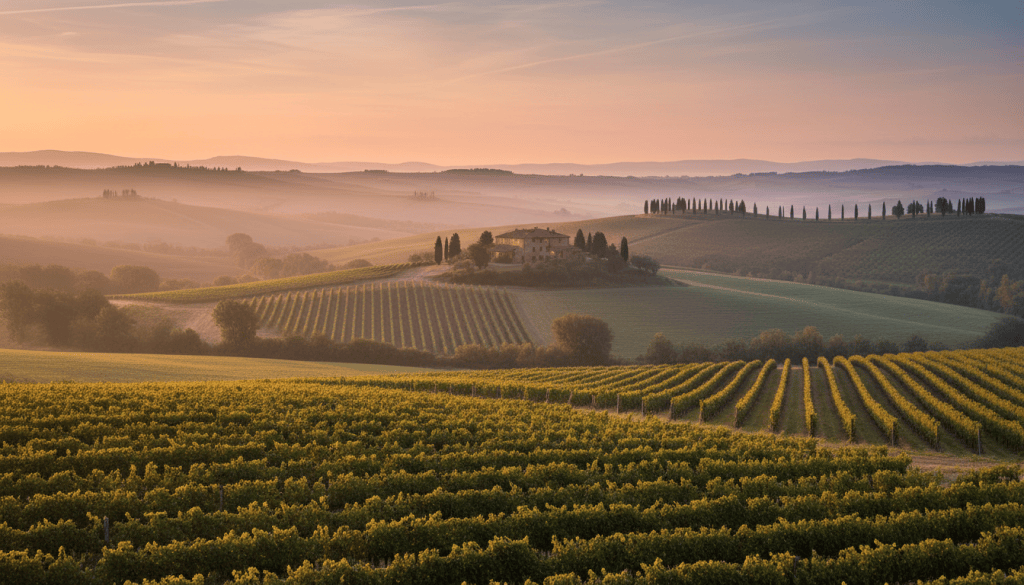
Villa Luminara and San Vireo are fictional locations created for The Cursed Vineyard at Dawn. This setting guide expands the atmosphere of the novel without adding new plot revelations.
Villa Luminara
An aging Tuscan vineyard estate of warm stone, faded shutters, terracotta, jasmine, rosemary, and rooms that have spent years waiting to be used again. The villa is beautiful without being pristine. Cracks, worn floors, old repairs, stubborn doors, and neglected corners are part of its character.
For Celina, the estate matters because beauty and damage are allowed to exist together. Restoration never means pretending nothing happened.
The Vineyard
Rows of old vines fall away from the house toward the Tuscan hills. Some sections are younger and practical; others carry the weight of the Luminara women’s history.
The vineyard’s magic is intimate rather than spectacular. Leaves, fruit, scent, barrels, and the rhythms of ripening respond to emotional truth. The land does not function like a wish-granting fantasy system. It behaves more like a living witness with extremely strong opinions.
The Lemon Tree
The old lemon tree near the villa is one of Celina’s most practical landmarks because the mobile signal is better there.
It also represents something characteristic of Villa Luminara: ordinary life and strange inheritance occupying the same space. Legal emails, family messages, financial worries, village gossip, and impossible vineyard behavior can all reach Celina beneath the same branches.
The Cellars
Wine storage at Luminara is not merely atmospheric. Celina understands cellars professionally: temperature, aging, corks, sediment, service, and the disciplined attention wine demands.
That practical knowledge remains important even when she encounters aspects of Luminara that cannot be explained through conventional winemaking.
The West Rooms
Damaged rooms on the western side of the villa reveal another possible future for the estate. Sunlight, restored beams, long tables, and open windows suggest a place where wine could be experienced without the controlled luxury of Celina’s former hotel career.
The appeal is not perfection. It is hospitality that allows its repairs to remain visible.
The Courtyard
The courtyard is where Villa Luminara becomes most communal: bread arrives, arguments begin, Bruna supervises, neighbors appear without sufficient warning, and private decisions acquire an audience.
It is a useful counterweight to the ancestral spaces of the estate. The past may live in cellars and ledgers, but ordinary belonging happens around tables.
San Vireo
San Vireo is a fictional Tuscan village near Villa Luminara.
Its church tower, grocery, bread, local families, notary, farmers, herbal knowledge, gossip, and long collective memory give the vineyard a social world beyond the romance.
The village is affectionate without being private, supportive without being uniformly sensible, and capable of knowing a newcomer’s business well before she has decided it herself.
The Olive Grove
The olive trees provide a quieter landscape than the vineyard. Their silver-green leaves and older rhythm make them a natural place for reflection, work, and conversations that need distance from the house.
They also reinforce one of the novel’s central ideas: a productive landscape is never merely scenery. It carries labor, weather, continuity, and time.
The Emotional Geography of Luminara
Villa Luminara works as a romantic setting because each part of the estate asks a slightly different question.
The vineyard asks what Celina is willing to acknowledge.
The cellar asks what she can taste beneath appearances.
The damaged rooms ask what she might rebuild.
The courtyard asks whether she can belong among other people without performing perfection.
And the view toward San Vireo asks whether a second life can become a real life rather than a temporary escape.
That is the particular magic of Luminara: not that it offers Celina a way to become younger, but that it gives her a place where experience, desire, grief, professional skill, family history, and love can all exist at the same table.
Explore More from the Villa Luminara World
Discover the book The Cursed Vineyard at Dawn and visit the Celine Aster author page.
Related extras: The Seventh Place at Villa Luminara · The Wine That Wasn’t on the List. Browse all Reader Extras.

