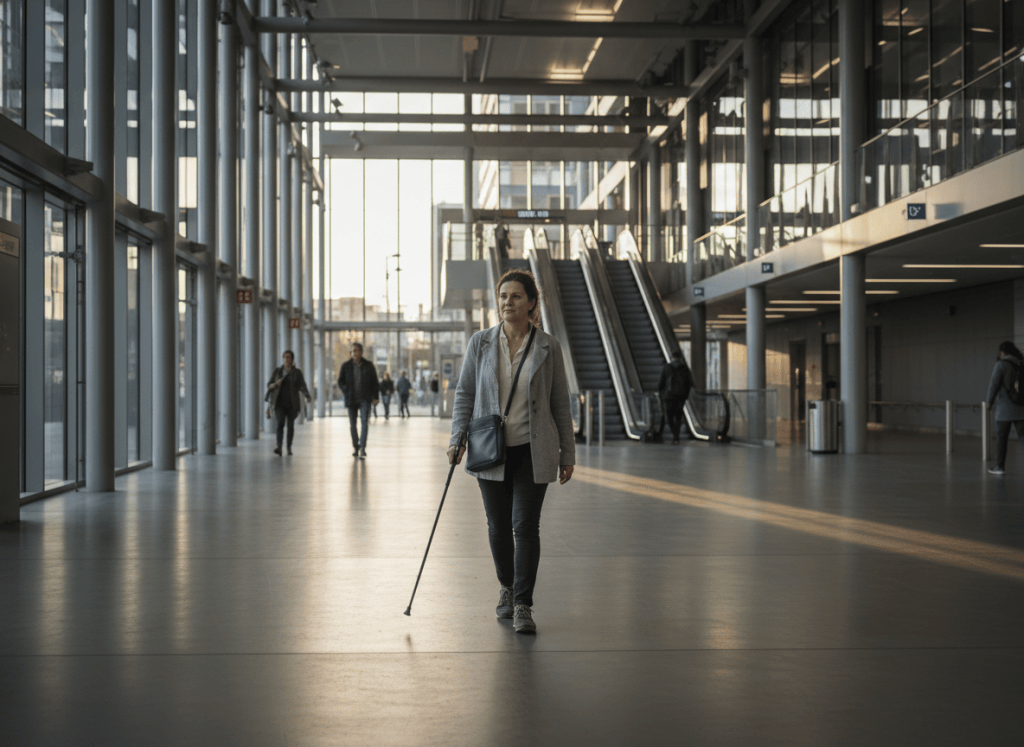
Personal safety planning can look very different when pain, fatigue, dizziness, limited mobility, brain fog, or joint instability can change what your body can do from one day to the next. Advice built around speed, strength, endurance, or “just push through” thinking may not fit real life. A more useful approach starts with a different question: how can you make everyday situations safer while protecting your energy and respecting your physical limits?
That question matters because safety is not only about what happens during a confrontation. It also includes how you choose routes, where you sit, how quickly you can reach an exit, what you carry, who knows where you are, and whether you have a plan for days when symptoms are worse than usual.
Start with capacity, not an idealized version of yourself
A practical safety plan should work with your actual capacity. That means allowing for good days, difficult days, and days when symptoms change unexpectedly. The goal is not to predict every possible problem. It is to reduce the number of decisions you have to make under pressure.
One useful habit is to think in terms of a personal “capacity check” before leaving home. How much energy do you have? Are you steady on your feet? Is your concentration reliable today? Are you using a mobility aid? Do you have enough medication, water, or other essentials to avoid becoming stranded or overextended? This is not a test of whether you are “strong enough” to go out. It is a way to match the day’s plan to the body you have that day.
Plan around distance, exits, and recovery time
For people with chronic pain, distance can carry a hidden cost. A parking spot that looks only slightly farther away may become significant if you are already fatigued. A crowded venue may be manageable at the beginning of an outing and much harder after an hour. A transit connection that requires rushing may create risk even when the route itself is familiar.
Practical planning can include choosing locations with visible exits, sitting where you can leave without squeezing through a crowd, building extra time into travel, identifying rest points, and avoiding unnecessary route changes when symptoms are flaring. These decisions can improve both comfort and flexibility. The more options you preserve, the less likely you are to feel trapped by a situation that becomes physically difficult.
Create a flare-day version of your normal safety plan
A safety plan should not disappear on a bad symptom day. It should become simpler.
That might mean shortening an outing, using a more direct transport option, asking someone to meet you at the entrance, choosing a familiar destination instead of a new one, or moving an appointment if the trip itself would leave you with too little capacity to respond to an unexpected problem. The point is not to withdraw from everyday life. It is to make deliberate adjustments before fatigue or pain reduces your choices.
It also helps to pre-decide what will make you leave. For example: if dizziness increases, if the environment becomes too crowded, if you cannot access a seat, or if you begin to feel cognitively foggy enough that navigating home may become difficult, you already know the next step. A pre-decided exit rule removes some of the mental effort from a stressful moment.
Make your everyday carry genuinely useful
A safety bag does not need to become a heavy emergency kit. In fact, excessive weight can create its own problems. The best setup is usually the smallest one that supports your actual routines.
- Phone that is easy to reach rather than buried at the bottom of a bag.
- Portable charger or charging cable if being without power would leave you stranded.
- Essential medication or symptom-management items you normally rely on.
- Emergency contact information in a form you can access even if your phone is unavailable.
- Water or a small snack when these are relevant to your condition and routine.
- Only the items you can carry comfortably without increasing pain or imbalance.
Accessibility matters as much as contents. If you use a cane, crutch, rollator, or another mobility aid, your bag should not interfere with it. Frequently used items should be reachable without requiring awkward twisting, bending, or prolonged standing.
Use boundaries before a situation becomes physical
Self-protection includes social and verbal boundaries. Leaving earlier, changing seats, refusing unwanted help, asking someone to step back, declining a ride, or ending a conversation can all be safety decisions.
For someone whose physical capacity is limited, early boundaries may be especially valuable because they can preserve distance and reduce the chance that a situation becomes more demanding. Short, clear phrases are often easier to use under stress than long explanations: “No, thank you.” “I need more space.” “I’m leaving now.” “Please don’t touch my mobility aid.” You do not owe a detailed justification for every protective choice.
Build support without surrendering independence
Support can increase safety when it expands your options. That might mean sharing travel plans with a trusted person, arranging a check-in after an appointment, asking someone to walk with you through a difficult location, or setting up a simple code word for “call me” or “come get me.”
Useful support should not turn into control. The person helping you should not decide where you are allowed to go, pressure you to disclose more than you want to, or use your health limitations as a reason to take over your choices. Safety planning works best when assistance remains compatible with autonomy.
Physical defense should be adapted, not assumed
There is no single physical technique that is appropriate for every body or every medical condition. If you want hands-on self-defense training, look for an instructor who is willing to adapt movements around balance, range of motion, joint stability, pain triggers, and mobility aids rather than expecting everyone to perform the same drills.
Distance, balance, simple movement, access to exits, and creating an opportunity to leave may matter more than complex techniques. Any practice should be adjusted to your own health needs and stopped if it worsens symptoms or feels unsafe.
A calmer model of personal safety
Safety planning does not need to mean living in fear. It can be quiet, practical, and repetitive: choose the easier route, keep your essentials accessible, leave before you are depleted, notice exits, use clear boundaries, and involve trusted people when that gives you more options.
Luna Vale develops this pain-informed approach further in Unbreakable Safety, with attention to public spaces, transportation, flare days, relationships, physical defense, and recovery after frightening experiences. The useful starting point is simple: a safety plan should fit the body and energy you actually have, not the body an idealized self-defense scenario assumes.
Related reading: Situational Awareness Without Hypervigilance: A Calmer Approach to Personal Safety.
 Wonder Shelf Books