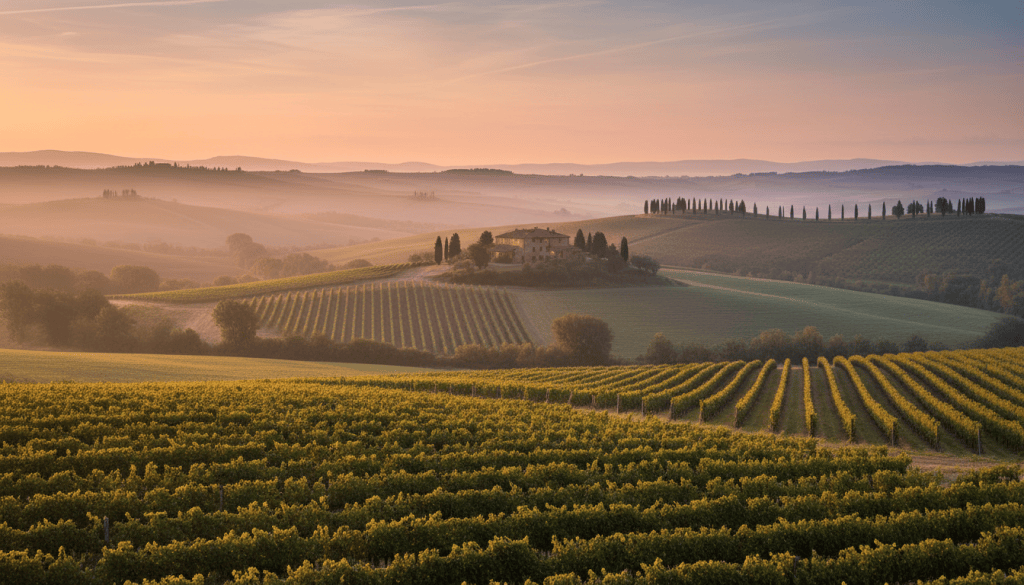
Tuscan vineyards are unusually effective settings for midlife romance because they combine beauty with work, inheritance, memory, and change. The landscape may appear timeless, but vineyards are never static. Vines must be pruned, trained, harvested, replanted, protected, and read season by season. That tension between permanence and renewal makes the setting especially well suited to stories about adults who are not beginning life for the first time, but deciding what to do with the life they already have.
A vineyard is a place where time is visible
Romance set in later life often carries a different sense of time from stories about first love. The characters usually arrive with histories: previous relationships, adult children, careers, grief, disappointments, obligations, and habits formed over decades. A vineyard reflects that accumulated past. Old vines can continue producing fruit, neglected land can be restored, and each harvest depends partly on decisions made long before the current season.
For fiction, this creates a natural metaphor without requiring the story to explain it directly. A character can walk through rows planted by another generation, taste a vintage made years earlier, or inherit a property whose condition reveals the choices of the people who came before. The setting makes history tangible.
The beauty of Tuscany works best when it is not only decorative
Tuscany is often associated with warm stone houses, cypress-lined roads, hill towns, olive groves, long tables, and golden light. Those visual elements are immediately attractive, but a strong romantic setting needs more than scenery. The place becomes convincing when the characters must actually live and work inside it.
A vineyard brings practical pressures into the story: damaged vines, weather, harvest timing, labor, storage, property boundaries, renovation costs, old records, and the question of whether an estate can survive economically. These details turn the romantic landscape into a working environment. They also give characters reasons to spend time together that do not depend entirely on attraction.
Wine naturally connects memory, craft, and identity
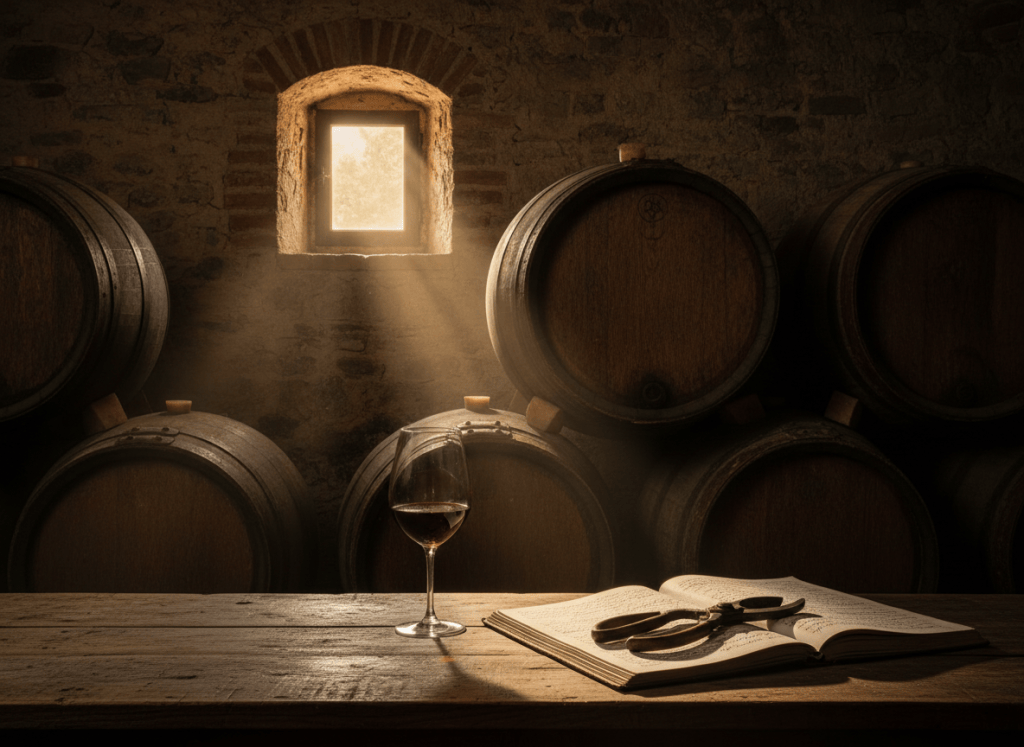
Wine is unusually useful in character-driven fiction because it is both sensory and technical. It can be experienced through taste, scent, texture, and place, while also involving expertise, patience, and judgment. A character who works with wine can therefore be portrayed through action rather than description alone.
In The Cursed Vineyard at Dawn, Celine Aster uses a professional sommelier heroine, Celina Voss, whose knowledge of wine is part of her identity before she ever arrives at the inherited estate. That matters because the vineyard is not simply an exotic destination dropped into her life. It intersects with skills she already possesses, even as the estate forces her to confront things those skills cannot solve.
The novel adds a magical layer by linking wine with memory and inherited truth. That element is fictional, but it grows from qualities already associated with wine in ordinary life: vintage, place, age, preservation, ritual, and the way a taste can evoke another time.
Inherited property creates immediate emotional stakes
An inherited vineyard can function as a romantic setting and a family problem at the same time. The protagonist is not simply visiting a beautiful region. She must decide what the property means, whether she wants responsibility for it, and how much of the past she is willing to accept along with the land.
This is particularly effective in midlife fiction because inheritance often arrives when a character already has an established identity elsewhere. The question is not “Who will I become when I grow up?” but “Which parts of my existing life still belong to me, and which do I want to change?” A house, vineyard, shop, inn, or farm can make that choice concrete.
Celina’s situation in The Cursed Vineyard at Dawn follows that pattern. At fifty-three, after divorce and career disruption, she travels to Villa Luminara intending to inspect the property and leave. The estate instead becomes a test of whether she will treat the inheritance as an obligation to dispose of or as a life she might actively choose.
A working landscape slows romance in useful ways
Slow-building romance needs credible reasons for intimacy to develop gradually. Vineyard settings provide them. Repairing a building, preparing for harvest, checking records, managing a cellar, walking boundaries, or solving practical problems can reveal compatibility before either character declares romantic intentions.
This can make mature romance feel especially grounded. Attraction is present, but so are competence, patience, grief, trust, and the question of whether two adults can fit their existing lives together. In Celine Aster’s novel, Matteo Rinaldi is a widowed restorer of historic buildings. His work gives him a practical relationship with the estate, while his own history of loss adds emotional weight to the growing connection with Celina.
Community prevents the setting from becoming a private fantasy
Vineyard stories are often strongest when the estate exists within a wider community. Local workers, neighboring families, village businesses, tradespeople, markets, and long memories make the protagonist accountable to more than personal desire. The setting gains social texture, and the romance becomes part of a larger life rather than an isolated escape.
The Cursed Vineyard at Dawn places Villa Luminara near the fictional Tuscan village of San Vireo. The village itself is invented, but its narrative role is important: it gives Celina a community to enter, relationships to negotiate, and a sense that the vineyard has a history beyond her own understanding of it.
Why the setting suits stories about beginning again
The deepest appeal of a vineyard in midlife romance is that renewal does not require erasing age. Old vines are not valuable because they pretend to be young. A mature protagonist can likewise change direction without discarding her past. Experience becomes part of the new life rather than an obstacle to it.
That is why Tuscany, vineyards, inherited estates, and later-in-life romance work so naturally together. The landscape offers beauty, but the story gains depth from work, time, memory, and consequence. For readers drawn to atmospheric settings and emotionally grounded reinvention, the vineyard can become more than a backdrop: it becomes the structure through which the character decides what is worth keeping, restoring, and choosing again.
Explore more about Celine Aster and her magical midlife romance fiction on Wonder Shelf Books. For the emotional structure behind these stories, read Why Later-in-Life Romance Feels Different in Fiction.

