The Private Vault
A complete companion to The Private Vault by Conrad Ellison, from The Offshore Files.
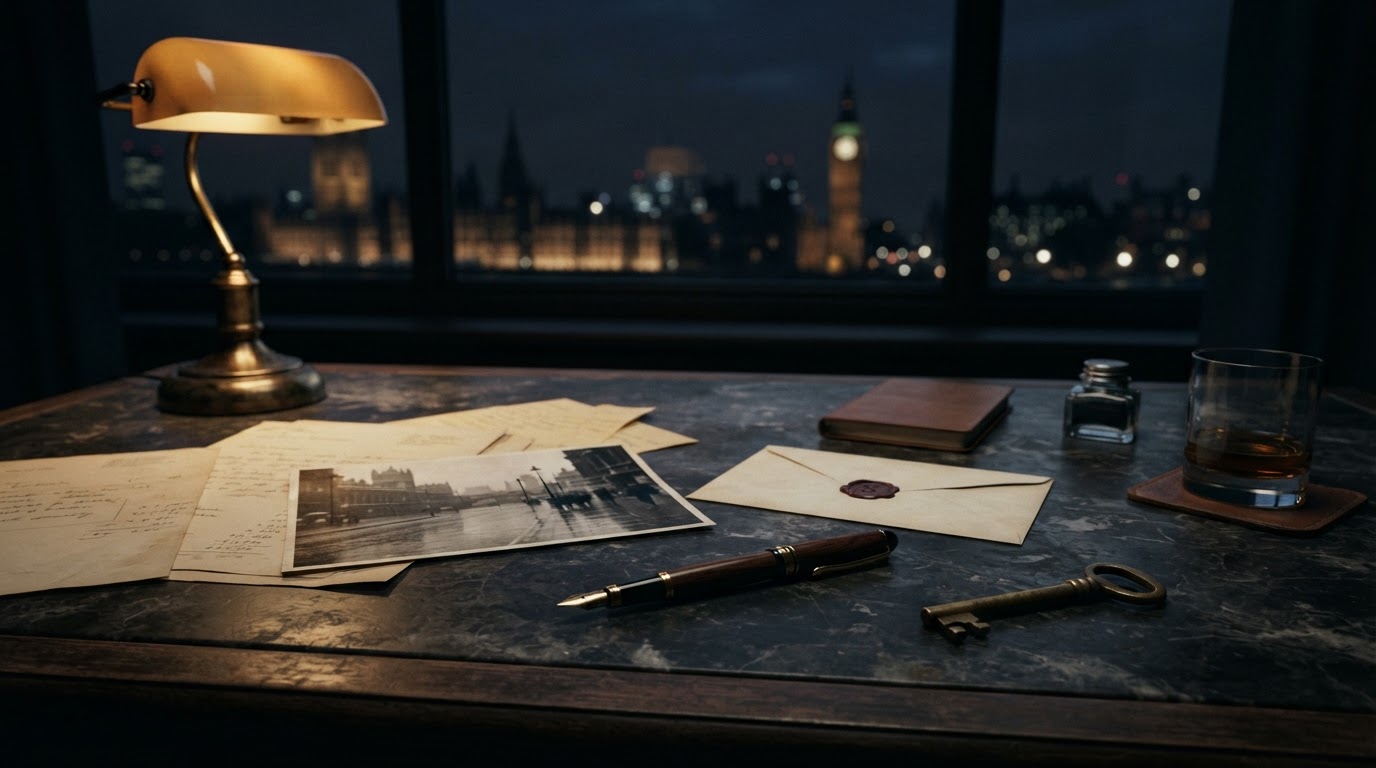
A spoiler-free collection of two original stories from the world of <em>The Offshore Files</em>, followed by a practical reader’s evidence notebook. Mara Voss uncovers the truth behind a disputed rent payment that threatens a neighborhood reading room. Elias Renn investigates a photograph whose narrow frame has fueled a damaging accusation. Both incidents stand alone; neither retells the central mystery of <em>The Private Vault</em> or reveals its resolution.
Inside this Reader Bonus:
- Story 1 – The Last Rent Receipt: a complete Mara Voss case.
- Story 2 – The Photograph Outside the Frame: an independent Elias Renn investigation.
- The Evidence Reader’s Notebook: a spoiler-free guide to distinguishing clues, claims, and uncertainty.
Bonus Story 1: The Last Rent Receipt
An independent Mara Voss case from the world of The Offshore Files. This story stands apart from the main novel and does not reveal its central mystery.
The reading room was due to close on Friday, and somebody had already ordered flowers.
Mara Voss found them on a table beneath a window overlooking a wet London street: white chrysanthemums in a tall glass jar, their stems arranged with the conscientious sadness of a funeral offering. Next to them sat a cardboard box marked CHILDREN’S ATLAS, a roll of brown tape and a brass bell that nobody seemed willing to ring.
“They are for the volunteers,” said Nora Bell, director of the Bexford Exchange Reading Room. “If we lose the building, I thought we should at least acknowledge what they did.”
“You haven’t lost it,” Mara said.
“The managing agent seems very sure we have.”
“Managing agents often are. It is part of the service.”
Nora almost smiled. She was in her fifties, with tired eyes and an ink stain near one cuff. The room around her had been a railway weighing office before it became a place where children came after school, older residents read newspapers without buying a coffee, and people who had never owned a computer learned how to use one without feeling foolish. Bookshelves stood against the old industrial walls. A hand-painted timetable announced reading groups, language classes and a weekly repair clinic.
The disputed sum was twelve thousand four hundred pounds, three months’ rent and service charge paid in one transfer. According to Nora’s bank, the money had left the charity’s account six weeks ago. According to Whitlock Collections, the agent acting for the building owner, nothing had been received. The landlord’s letter alleged persistent arrears and demanded possession negotiations begin at once.
“Have you missed any other payments?” Mara asked.
“Not one. We have the statements. We had a grant, and we paid ahead precisely because we knew how precarious the place was.”
“And the landlord?”
“A property company. They used to send someone to the Christmas fundraiser. Now they send letters on very thick paper.”
Mara laid the documents across an empty reading table. Nora had organized them in transparent folders: the grant award, the invoice, the payment instruction, the bank’s confirmation, three increasingly hostile letters from the agent. The paper was excellent. The situation was not.
“Tell me what you want,” Mara said.
“To prove we paid.”
“That is what you think you need. What do you want?”
Nora looked toward a corner where a boy had left a half-finished model of a bridge. “I want the children to have somewhere to come next Monday.”
“All right,” Mara said. “Then we work toward Monday.”
She photographed every page and wrote down the sequence of events. When she reached the transfer confirmation, she paused. The beneficiary name matched Whitlock Collections. The account details matched the invoice. But the reference field was longer than the references on six older receipts.
“Who typed this?”
“I did. I copied it from their new invoice.”
“Did they explain the change?”
“New reconciliation system, they said. Every unit needed a longer reference.”
Mara compared the two formats. The old receipt read BXR-04. The new invoice read BXR-04-17. Neither was obviously wrong. The bank confirmation displayed the longer one exactly as Nora had entered it.
“If I have made a mistake,” Nora began.
“Then we establish which mistake, whose, and what it changes. Don’t volunteer responsibility before we’ve found the problem.”
Nora folded her hands. “You sound like you spend a great deal of time telling people that.”
“People with authority love an early apology. It saves them paperwork.”
Outside, a bus pushed a fan of water across the curb. Inside, the room smelled of damp coats, glue and inexpensive tea. Mara was familiar with cases involving numbers large enough to make their owners believe consequences belonged to other people. Twelve thousand four hundred pounds was not that kind of number. Here it could close a room by Friday.
Whitlock Collections occupied the third floor of a renovated warehouse near the river, in offices so determined to appear informal that a neon sign declared WE CARE ABOUT DETAIL above the reception desk.
A junior employee named Nadine Thorne met Mara in a glass interview room. She had been asked to explain the charity’s position, which was a gentle way of saying she had been sent to repeat a conclusion she had not reached.
“The account is in arrears,” Nadine said, setting down a printout.
“The charity has evidence of payment.”
“A bank confirmation means a payment was instructed. It does not mean our client ledger received it.”
“Quite right. So what does your client ledger show?”
“Zero received against the tenant account.”
“Against the tenant account,” Mara repeated. “Not zero received by Whitlock.”
Nadine’s expression changed so little that Mara could not have described it to someone else. But her next sentence arrived more slowly.
“Our reports are reconciled by reference.”
“BXR-04-17?”
“I can’t discuss other accounts.”
“I haven’t asked you to. I am asking whether the reference on your own invoice corresponds to the reference on the charity’s payment.”
“It does.”
“Then why is the receipt missing?”
“That is the outstanding query.”
“When was it raised?”
Nadine glanced at the door. “You need to speak to my manager.”
“I will. But when was the query raised?”
“Two weeks ago.”
Mara waited.
“Possibly earlier,” Nadine said.
“Do you have a query number?”
“Ms Voss, I have been told to refer you to the arrears team.”
“Isn’t this the arrears team?”
Nadine looked past her at the neon sign through the glass. “Yes.”
Mara put away her pen. “Then somebody has confused a route with an answer. Thank you for your time.”
She left without asking Nadine to breach any confidence. At reception she requested the managing agent’s written complaints procedure and an address for formal correspondence. The receptionist printed both, apparently relieved to be given a task with an obvious result.
On the pavement outside, Elias Renn was waiting under an umbrella with a coffee he had bought for himself.
“You could have told me you were coming,” Mara said.
“You told me you were meeting a property agent. I assumed the public required protection.”
“From me or from them?”
“Whichever one makes a better headline.”
Elias had heard about the reading room from a local reporter. He wanted to photograph the volunteers boxing books. Mara did not object to the photographs. She objected to the story he had already begun telling in his head.
“It’s not an eviction yet,” she warned.
“Then I won’t call it one.”
“And the money may be sitting in an unresolved payment bucket, not stolen.”
“That phrase would make an excellent newspaper column.”
“It would make a misleading one.”
He lifted his free hand in surrender. “I’ll wait until the facts have a spine.”
Across the street, a courier on a bicycle dodged a taxi and swore at the weather. Mara watched the Whitlock building for another moment. The company had produced an invoice carrying a reference number. The tenant had copied it. The money had left the tenant’s bank. Somewhere between receiving funds and crediting the correct account, the trail had stopped. A computer error was possible. So was a decision not to correct a computer error.
“There is an old rule,” Elias said beside her. “The story is usually less sinister than the headline.”
“Sometimes it is more ordinary,” Mara replied. “That isn’t the same as less damaging.”
The next morning, the landlord’s representative arrived at the reading room before ten. Rowan Deane was a neat man in a blue coat carrying a portfolio that looked waterproof even in the dry. He introduced himself to Nora and addressed all his remarks to Mara.
“My client appreciates community use of the premises,” he said. “Unfortunately, proper stewardship requires financial discipline.”
“Then this should be a gratifying meeting,” Mara said. “We have financial records.”
Rowan put his portfolio on the table but did not open it. “The records show rent unpaid.”
“Your records show an account with no credit. That may not be the same thing.”
“We can’t give preferential treatment to one tenant simply because it has a sympathetic mission.”
“Nobody has asked for preference. We have asked where the payment went.”
“Whitlock has certified the arrears.”
Mara pushed a sheet toward him. “This is their invoice. This is the bank’s beneficiary confirmation. The amount and receiving account match. Would you ask Whitlock for the status of the incoming funds under this full reference?”
Rowan looked at the page without touching it. “The property company has no role in day-to-day reconciliation.”
“You are asking this charity to vacate the building based on that reconciliation. You have a role now.”
Nora stood by the windows, so still that Mara could see her effort not to interrupt. On the windowsill a child had arranged miniature paper houses in a row. Each was made from a different colored leaflet. One had no roof.
“Our advisers will respond in writing,” Rowan said.
“Good. I prefer written responses.”
He rose. “With respect, Ms Voss, you have no standing under this lease.”
“None at all. That is why I am not signing it.”
For the first time his composure slipped. He glanced at Nora, then at the boxed books, as if discovering that the room had other occupants with purposes of their own.
At the door he added, “The owner could use the site more effectively.”
Nora spoke before Mara could. “Effectively for whom?”
Rowan looked genuinely surprised. “For the asset.”
After he left, Nora sat down with a care that looked almost ceremonial.
“He didn’t even say the word building,” she said.
“No.”
“How can a reading room lose to an asset?”
“It hasn’t yet.”
Mara examined the invoice again. Two tiny lines at the bottom caught her eye: This document replaces all previous instructions. Below that was a contact telephone number she had not seen on any earlier correspondence. She called it.
A recorded greeting said, “Whitlock Collections, facilities allocation desk.”
Not arrears. Allocation.
She asked for a statement of the receiving bank account’s inbound payments, limited to the date, amount and reference of the charity’s transfer. The employee explained that such records could only be disclosed to the account holder or its authorized agent. Mara agreed. She asked the correct route for a request to preserve the entries. She put that in writing as well.
“What did they say?” Nora asked.
“That they’re allowed to keep someone else’s data private. Which is fine. The problem is when privacy becomes an excuse for keeping their own error invisible.”
They drafted a joint letter to the property owner and agent. It set out the known facts without alleging theft. It requested confirmation that the funds had been traced, identified the payment reference, and asked the owner to suspend action while the recipient investigated. Nora signed it; Mara attached the documents. The charity’s solicitor would review the lease position separately.
By three o’clock, they had received no response.
By four, a new arrears statement arrived showing a further fee.
“They’ve charged us for asking,” Nora said.
“Not quite. They’ve charged you for being on the list that says you owe money. The question is whether the list deserves to exist.”
Nora looked at the chrysanthemums. Their leaves had begun to curl at the edges. “I shouldn’t have bought those.”
“Keep them. A room should have flowers even when men in waterproof portfolios visit.”
At five twenty, Nadine Thorne called from a number Mara didn’t recognize.
“I can’t send you internal files,” she said without greeting.
“I haven’t asked you to.”
“I know. I wanted to be clear.”
“You are.”
There was a long pause, filled with the low rumble of traffic on Nadine’s end.
“Your client needs to ask the owner to request the suspense-account reconciliation for the eighteenth,” Nadine said.
Mara stepped away from the reading room window. “Why that date?”
“Because the money might have been received then.”
“Might?”
“I didn’t post it to the tenant account. Nobody did.”
“Why not?”
Nadine said nothing. Mara could imagine her measuring the risks of each next word against a salary, rent, references, the cost of being the person who objected.
“You don’t have to tell me,” Mara said. “The owner can request its own ledger.”
“The reference has six extra characters,” Nadine said. “The new system treats them as a separate property code. The Bexford rent ledger uses the old code. Their transfer was placed in suspense on receipt.”
“So Whitlock had the money.”
“The receiving account recorded it. It wasn’t applied to the tenancy.”
“Who could correct that?”
“A supervisor. The same supervisor who approved the template.”
“And did someone ask?”
Nadine drew in a breath. “The first request was logged the morning after the transfer.”
Mara closed her eyes briefly. Six weeks of letters, a threatened closure, and a reconciliation query waiting inside an organization that charged for precision.
“Thank you,” she said. “You haven’t given me a client record. You’ve explained what document the client should ask for. That’s enough.”
“Will you say where you heard it?”
“No.”
“Please.”
“I won’t.”
After the call, Mara did not rush to expose a clerk. She called Nora and the charity’s solicitor, then sent a narrower request to the owner: obtain Whitlock’s suspense-account report for the transfer date; identify the creation date of the allocation exception; confirm whether the owner or agent had issued the replacement reference; and give written assurances that enforcement would pause pending reconciliation. Every question concerned the owner’s own rent transaction.
Twenty-two minutes later Rowan Deane replied for the first time.
This is an internal accounting issue. Your demands are disproportionate.
Mara read the message twice. It admitted more than the writer intended.
She copied the sentence into a timeline and sent back one line: Please confirm whether you agree there is an internal accounting issue affecting the arrears statement.
Silence followed.
At eight, Elias called. He had photographed Nora and three teenagers taking books out of boxes and putting them back on shelves because they could not bear to decide which ones to pack.
“I can run the story tomorrow,” he said. “There is a landlord who calls children an inefficient use of property.”
“Don’t quote him as saying that.”
“I didn’t say he used those words.”
“Your readers will think he did.”
“You are a difficult friend.”
“You don’t employ me for ease.”
“I’m not sure I employ you at all.”
“Exactly.”
She told him what could be reported: the charity disputed the arrears, the payment confirmation existed, reconciliation was being requested. No allegations against named staff. No invented motive. Elias listened with the patience of someone who understood that the most satisfying account of an event was not always the correct one.
“Fine,” he said at last. “I’ll write about why the place matters. The money can wait until we know where it is.”
“That’s a better story.”
“It is a smaller one.”
“Those are not opposites.”
The decisive document arrived on Thursday morning. It was not sent to Mara but to Nora’s solicitor by the property owner, whose legal adviser had apparently decided the suspense report might be easier to explain than an action taken on a rent default that did not exist.
The report showed an inbound payment of twelve thousand four hundred pounds on the eighteenth. The payment had been received into Whitlock’s designated collection account and parked under BXR-04-17, an inactive allocation code created during a software migration. Attached was an unresolved correction request dated the following day. A second entry showed that a supervisor had declined automatic reallocation because the owner had been notified of a possible redevelopment consultation.
The report did not prove a criminal scheme. It did prove the money had been received and that the missing rent credit was not Nora’s doing. It also showed that Whitlock’s arrears statements had been generated long after someone knew there was a live exception. That mattered more immediately than any speculation about why.
Nora read the page three times. “So we paid.”
“You did.”
“They knew.”
“At least somebody knew there was a reconciliation problem. Their managers need to explain what they did about it.”
“And now?”
“Your solicitor takes it from here. We insist on a corrected statement, withdrawal of fees, and written confirmation about the premises. We don’t turn a report into a courtroom verdict on our own.”
That afternoon, the owner confirmed the funds would be applied to the tenant ledger with the original receipt date. The disputed fees were removed. The immediate demand to negotiate possession was withdrawn, without prejudice to the separate terms of the lease. Whitlock’s internal handling of the error would be reviewed. The wording was careful enough to avoid apologizing and clear enough to keep the doors open on Monday.
Nora stood behind the front desk with the corrected statement in her hand. “I thought finding proof would feel bigger.”
“What does it feel like?”
“A headache. And a need to sleep for a week.”
“That sounds about right.”
“Did we win?”
Mara considered the question. The charity still had a landlord who saw greater value in the site than the people inside it. The lease still required attention. Nobody had promised future kindness. But an accusation had been corrected, money had been found, and the reading room would open again.
“You won this Thursday,” she said. “Now make sure someone is keeping an eye on Friday.”
Nora laughed, unexpectedly loud. A child at the nearest table looked up, surprised, then returned to drawing his bridge.
Elias arrived with a photographer and two slices of cake in a paper bag. He had kept his promise. His article led with the children’s reading group, the repair clinic, the former railway office and the local volunteers. The accounting dispute appeared only after the facts were verified.
“You are not going to enjoy the headline,” he told Mara.
“Why?”
“‘Reading Room Saved by the Small Print.’”
“It wasn’t saved by small print. It was saved by somebody refusing to confuse unallocated with unpaid.”
“A breathtaking headline. I can see the billboards already.”
The children were taping handmade signs to the windows. OPEN MONDAY, one said, in letters thick with paint. Another read PLEASE DON’T TAKE THE ATLAS.
Mara found Nora by the flowers. They were past their best, but somebody had trimmed the stems and added fresh water.
“I was going to throw them away,” Nora said.
“Why didn’t you?”
“The children said they were still flowers.”
Outside, rain began again. Mara put on her coat and watched the young bridge-builder set the last paper span between two cardboard towers. It held because he had placed a folded strip underneath where nobody could see it.
She left the room to its books, its children, its unfinished repairs and its modest, hard-won Monday. There were no dramatic doors to open, no vault beneath the floor, no single confession that would reorganize the world. There was only a receipt, a distinction accurately made, and a place that remained open because someone had insisted the records match the money.
For once, it was enough.
Bonus Story 2: The Photograph Outside the Frame
An independent Elias Renn story from the world of The Offshore Files. No knowledge of the main novel’s resolution is required.
By seven in the morning, half the city had seen a photograph that showed two men who might not have been speaking to each other.
The caption said they were negotiating a payoff.
Elias Renn saw the difference before he finished his first cup of coffee. The men stood outside the boarded entrance to a former Westmere Mutual branch in east London. One was Daniel Pike, the savings institution’s regional director, identified by a familiar public photograph. The other wore a dark overcoat and had his back to the camera. Between them, apparently suspended in the weak light of a streetlamp, was a yellow document envelope.
The image looked convincing because it offered so little. A wet pavement. A shuttered branch. An envelope. Two men positioned exactly far enough apart for an imaginative viewer to supply the missing movement.
Across it someone had written: BRANCH CLOSURES PAID FOR IN CASH.
“My inbox is on fire,” said Ruth Anwar, editor of the independent news desk where Elias had promised to deliver a different story that morning. “A thousand shares, then five thousand, then an accusation from someone who used to work at the branch. Is it genuine?”
“The picture is an image,” Elias said. “The caption is a hypothesis.”
“Can you confirm the hypothesis?”
“Not yet.”
“Can you disprove it?”
“Also not yet.”
“Then you have ninety minutes before every outlet in the country decides uncertainty is too expensive.”
He heard her typing as she spoke. Ruth had an unforgiving voice and an honest dislike of avoidable mistakes. She also ran a newsroom that counted every lost subscriber and every invoice twice.
“Don’t publish the accusation,” Elias said.
“I haven’t. That’s why I’m calling you.”
“Who’s the original photographer?”
“Anonymous. It came through an encrypted tip form. No file metadata.”
“Then somebody chose both the crop and the words.”
“Somebody always does. Find out what they left out.”
The line went dead.
Elias enlarged the picture. The envelope appeared to touch both men’s hands, but one hand was blurred and the other almost entirely hidden by the sleeve of a coat. There was a strip of pale orange light across the glass behind them. In the lower corner, something black and round entered the frame. A tyre, perhaps. A shadow. The edge of a bicycle.
His phone buzzed again. A message from Tamsin Grant, the freelance image researcher who sometimes helped Ruth when photographs arrived without a past.
I’ve found two versions. Don’t trust either.
He sent her a question mark.
Meet at the old branch. Bring shoes you can get wet.
The branch had closed eight months earlier. Its sign remained above the windows, but the letters had faded unevenly where someone had removed the illuminated backing. A notice on the door redirected customers to an office across the river or to online services. A hand-lettered message taped beneath it read: SOME OF US DO NOT HAVE ONLINE.
Tamsin was waiting beside a bus shelter with a camera and a paper notebook. She wore a green coat, carried three charging cables, and regarded every photograph as an argument between what a lens recorded and what a viewer wanted.
“The first version appeared at 6:12,” she said. “The one everyone’s sharing. The second appeared nine minutes earlier in a private neighborhood group. No caption. Different crop.”
“Different how?”
She held up her phone. The men were smaller, the street wider. The yellow envelope lay much closer to the foreground than Elias expected. A delivery trolley stood in the lower left corner.
“There was a third person,” he said.
“Almost certainly. And look at the reflection.”
He leaned toward the glass of the bus shelter. At first he saw only a fluorescent rectangle, distorted by rain. Then he recognized the orange strip: it came from a sign in the window of the building across the road, not from inside the bank. The photographer must have been standing closer to the shelter than the viral image implied.
“The envelope could be on the trolley,” he said.
“It could. Or held by someone behind it. What it cannot do is leap ten feet through an optical illusion.”
They crossed the street and stood where the original photographer might have stood. The bus shelter, the shuttered branch and the shopfront behind it lined up. When Tamsin raised her camera, the two separate doorways seemed to merge in the preview screen.
“Perspective,” she said. “A narrower lens angle makes it easy to flatten the space.”
“The men might not even be on the same pavement.”
“One might be entering the building behind the other. We need the full file.”
They walked into the shop with the orange sign. It had once sold stationery, then mobile phone accessories, and now housed a nonprofit advice centre called Corner Table. The front room contained folding chairs, storage crates, a kettle and a notice board advertising debt advice, food distribution and help with digital forms.
A woman behind the desk watched them with immediate suspicion.
“We’re closed for intake until noon,” she said.
“We’re not here for advice,” Elias replied. “We’re trying to find the person who photographed the branch yesterday evening.”
The woman’s suspicion increased. “Why?”
“Because a version is being shared that accuses someone of a crime. We don’t know if the picture supports it.”
The woman looked at Tamsin’s camera. “You can put that away.”
Tamsin did.
“I’m Molly Deacon,” the woman said. “I took pictures for our volunteers yesterday. Which one have they stolen?”
Elias showed her the viral crop.
Molly’s face tightened. “That isn’t what happened.”
“Could we see the original?”
“If you’re going to publish it, I want to know what you’re saying first.”
“You can see the passage we intend to attribute to you,” Elias said. “You can’t approve the whole article.”
Molly considered that. “Fair. Come through.”
In the back room, beside cartons of donated heaters and blankets, Molly opened a laptop. She had photographed volunteers moving supplies between the advice centre and a temporary storage unit after a radiator failed. The images were mundane in the way photographs usually were before someone selected a crime to fit them.
There was Daniel Pike at the edge of one image, coat damp, holding a paper cup. There was a man in a dark overcoat near the storage door. There was the yellow envelope, standing in a wire tray on the trolley. And between the two men was a glass panel that made the viral crop’s implied exchange physically impossible.
“Who is the man in the overcoat?” Elias asked.
“Our volunteer caretaker, Mr Farrow. He’ll be furious if you call him a property developer.”
“Why was Pike here?”
“He came because our old branch had promised to sponsor the heating clinic. Once the branch shut, payments got lost in the regional office. We chased him for two months. He finally came to see what the grant was for.”
“And the envelope?”
“A building inspection report. We had water coming through a ceiling. We need written permission to use the storage room longer. The caretaker brought the report for the landlord’s surveyor.”
“Not money?”
Molly laughed without humor. “If somebody had handed us cash, I’d have been considerably happier.”
Elias asked to see the complete sequence and the original file properties. The photo timestamps placed the images during the evening volunteer shift, not in the early hours claimed by several social posts. In a wider frame, the yellow envelope stood on the trolley while the two men occupied different doorways. The hand blurred in the viral image belonged to a volunteer reaching for a carton.
“May we photograph your screen?” Tamsin asked.
“You may have copies of these three,” Molly said, selecting files. “Not the pictures with people’s names on the intake sheets. Some of our visitors don’t want their situations public.”
“Understood,” Elias said.
Molly folded her arms. “Will you print that the accusation is wrong?”
“We’ll print what we can establish. The image does not show a cash exchange. It was taken during your volunteer shift. The men were separated by a glass panel. Those facts are clear.”
“And the branch closures?”
“That’s a different story.”
“Not to us.”
She took him to the front window. Across the road, an older man stood before the shuttered branch, peering at a notice through rain-speckled glass.
“He used to come twice a week,” Molly said. “Staff would explain his statements. Now he takes two buses to ask the same questions. You can spend all day proving an ugly picture false and still miss the reason people believed it.”
Elias looked back at the laptop. He had grown accustomed to the revelation that a story could be false in its vivid detail and true in its underlying anger. The distinction was rarely popular. It was still necessary.
“Would you speak on record about the advice centre?” he asked.
“If you explain what you’re asking.”
“I want to understand what closure changed for people who used the branch. And whether the promised support has arrived.”
“Now,” Molly said, “that’s a question.”
Back outside, Tamsin examined the original images on a laptop balanced across the boot of Elias’s car. The photograph that went viral had been cropped so that a hand, a yellow envelope and two separate people seemed to form a single transaction.
“It wasn’t an innocent crop,” she said.
“You don’t know intention from geometry.”
“Somebody removed the exact strip that showed the glass.”
“They may have wanted a closer image.”
“You always become charitable about motives when you dislike the available accusation.”
“I am not being charitable. I am refusing to invent the mind of the person who pressed the crop button.”
Tamsin closed the laptop with exaggerated care. “Fine. Then what do we know?”
“A false claim is spreading. The original image doesn’t support it. The branch has closed. The centre is still waiting on part of a promised grant.”
“And there is a redevelopment proposal, according to the planning notices.”
“Which is public and could be worth reporting.”
“What about the anonymous tipster?”
“We ask why they offered that caption, but we don’t publish a guess about who they are.”
He called Ruth.
“I have the original photographs,” he said. “The alleged payoff is not visible because it didn’t happen in the way the crop suggests. One man is behind glass. The envelope sits on a supply trolley.”
Ruth let a breath out slowly. “So we have a fact-check.”
“We have a fact-check and a real story about the advice centre that inherited a closure’s consequences.”
“Can you verify the grant delay?”
“Molly has correspondence. We need the institution’s response.”
“And the planning claim?”
“Application documents. Nothing secret. They don’t establish that a payoff occurred.”
“I know how to read an application,” Ruth said. “I’m asking whether the proposal is live.”
“I’ll check.”
There was typing again, and then Ruth said, “The other papers are calling it an exclusive.”
“An exclusive what?”
“A meeting.”
“People meet all the time.”
“It has a very attractive envelope.”
“I can recommend a stationery shop.”
Ruth’s laugh was brief. “You have one hour. Don’t make me regret it.”
Elias spent the next forty minutes doing things that would never make compelling television. He called the institution’s press office and submitted questions in writing. He checked the public planning register and found that a proposed conversion of the shuttered branch to small offices had been under consultation for months. He asked whether the region had approved the change, whether alternative in-person service was planned, and whether Corner Table’s promised grant had been delayed. He requested permission to quote Molly about the centre’s work and obtained the advice centre’s own redacted summary of its correspondence.
The press response arrived at 10:41. Westmere Mutual said the branch had closed after a service review, denied any improper payment to a developer, and confirmed that one part of the community grant had been held pending verification of revised premises costs. The spokesperson also confirmed that a broader review of local in-person services remained ongoing.
There was no admission of wrongdoing. There was a specific explanation for a delay that had been presented to volunteers as silence. That deserved scrutiny, though not the accusation currently making the rounds.
“Are they lying?” Tamsin asked after reading the statement.
“We don’t know. We can check the timeline and ask more.”
“You love answers with that sentence in them.”
“It has kept me employed longer than some of my colleagues.”
The deadline pressed closer. At 10:49 Ruth sent a draft headline: Viral Photograph Misrepresents Closed Bank Branch Meeting.
Elias changed meeting to scene. The photograph did not establish a meeting between the men, and after six hours of arguments about framing he was not prepared to let a headline reintroduce a fact they had spent the morning removing.
He sent back the correction and suggested a second piece about community access and the pending building conversion. Ruth replied with one word: Agreed.
That should have been the end of it. It wasn’t.
At eleven twelve, a message appeared through the same encrypted tip form that had delivered the cropped photograph.
You have the whole picture. You are protecting them.
Elias read the words twice. The sender might be someone at the bank. It might be an angry resident, a political rival, or a person who wanted the branch to remain closed for reasons of their own. The message did not tell him which.
He typed a response through the secure channel: If you have evidence of an improper payment, please describe it without naming vulnerable third parties. We will examine it. The photograph you sent does not show that payment.
The reply came almost instantly.
They always get away because reporters need proof.
Elias looked at the message until the words lost their heat. He understood the anger. He also understood what could happen if he traded the requirement for proof for the temporary satisfaction of naming somebody. A false accusation could make the real question disappear beneath a lawsuit. It could also fall hardest on the least powerful person in the frame.
Tamsin came back from buying sandwiches and found him staring at his phone.
“More?”
He showed her the screen.
“That’s cruel,” she said.
“It’s a very old argument. Evidence feels slow when you’re frightened.”
“And they think caution means choosing a side.”
“It often feels that way from outside.”
“What will you do?”
“Publish what we can prove. Leave the door open for evidence we haven’t seen.”
“You know that won’t satisfy them.”
“I am not writing to satisfy a stranger with a cropped photograph.”
The fact-check went live at eleven thirty. It explained the missing section of the image, the glass partition and the envelope on the trolley, with Molly’s permission and the original files. It did not identify visitors to the advice centre. It linked to the institution’s response and said plainly that the photograph did not substantiate the allegation circulating online. Below it ran a second article about the branch closure, the altered customer journey for residents, the pending conversion proposal and the delayed grant.
The response was immediate and unsatisfying in equal measure. Some readers thanked the newsroom for checking. Others accused it of defending finance. One person called Tamsin a paid operative because she had explained focal length. The bank’s communications office sent a formal acknowledgment with no human sentence in it.
Then a local resident wrote to Molly, who forwarded the note to Elias with permission.
My father thought the bank had been paying someone to take the building. He was angry. He is still angry it closed. But he said thank you for explaining what the picture actually shows. Could you also find out why the replacement office has no chair for people who cannot stand in a queue?
Elias read it aloud to Tamsin.
“There,” she said. “A smaller question.”
“A better one,” he replied.
He called the replacement office to ask about seating. Unlike the anonymous tipster, the receptionist answered directly. Yes, a chair had been removed during building work. Yes, customers had complained. A temporary replacement was expected on Monday. Elias asked for the accessibility contact and sent a follow-up. He noted the explanation without promising that it solved everything.
By late afternoon, the false accusation was losing ground to photographs of the full scene. The proposed property conversion remained contentious. Corner Table’s grant was still partly delayed. People still had to travel farther for basic banking help. None of that became less real because an envelope had not changed hands.
Ruth called once the rush was over.
“Traffic’s lower than if we’d run the original,” she said.
“I know.”
“Corrections are more expensive than restraint.”
“I know that too.”
“You have a follow-up on the grant Monday.”
“I do.”
“And the chair.”
“Yes.”
“Then we haven’t wasted the morning.”
For Ruth, that was as close to praise as an editor should be allowed to come.
Elias returned to the shuttered branch before dusk. The streetlamp had come on, turning the wet pavement a sickly shade of amber. From the precise place where the original photographer stood, the two doorways aligned again. He could make the false story appear simply by moving a few steps and choosing what not to include.
Molly was locking the advice centre. She recognized him across the road and waved.
“Will you keep asking about the grant?” she called.
“Yes.”
“And the old man’s chair?”
“That too.”
She nodded, satisfied not by a promise of heroics but by two ordinary questions that could be answered in ordinary language.
Tamsin joined him a minute later. “I brought the original print,” she said, handing him a sheet in a protective sleeve. “Molly said you could keep it for the file.”
He held the photograph beneath the streetlamp. A trolley full of heaters. A volunteer reaching for a carton. A regional director standing outside a room where help was being organized. A caretaker in the next doorway. A yellow envelope resting quietly in a wire tray. Nothing in it was glamorous, and nothing in it was a confession.
“You could crop it anywhere,” Tamsin said.
“Yes.”
“What would you keep?”
Elias studied the image. “The trolley.”
“Why?”
“Because it tells me what the people in the room were doing before someone decided the men were the story.”
He slipped the print into his case without folding it. Somewhere else a more consequential investigation was already accumulating documents and witnesses and answers that would be difficult to contain. This one required only that he leave enough of the picture intact for its subjects to remain human.
At the curb, he paused to watch a volunteer roll the trolley through the advice centre’s door. The yellow envelope had disappeared. The heaters had not. Neither had the people waiting for them.
That was the part he intended to follow.
Companion Bonus: The Evidence Reader’s Notebook
A spoiler-free companion to Conrad Ellison’s The Private Vault and The Offshore Files.
Some financial thrillers turn on a weapon. Others turn on a document that appears to answer a question nobody has asked carefully enough. In The Offshore Files, records can be accurate and misleading at the same time. A transaction may be logged, but who approved it? A name may appear on a form, but in what capacity? A witness may be named, but what did that person actually see?
This notebook is designed for reading fiction, discussing a story with friends, or keeping track of the difference between a clue and an interpretation. It is not a guide to handling actual confidential records or a substitute for professional legal, banking or investigative advice.
The Four-Column Evidence Ledger
Whenever a scene introduces a document, try separating four questions instead of writing down one conclusion.
| What the story shows | What a character claims it proves | What remains uncertain | What could be checked next |
|---|---|---|---|
| A transfer receipt displays a time and amount. | The invoice must have been paid. | Was the money received and allocated to the right account? | Recipient acknowledgment and reconciliation entries. |
| A photograph shows two people near one another. | They were meeting in secret. | Does the angle distort distance or omit another person? | Wider images, original sequence, independent witnesses. |
| A name appears on an archive index. | The named person authorized the file. | Was the name used as creator, subject, witness or contact? | Document purpose, custody and surrounding correspondence. |
| A report uses the word verified. | Every statement in it is true. | What exactly was tested or checked? | Verification scope, source and limitations. |
You can make a new row each time the book gives you a record that looks definitive. The purpose is not to predict every twist. It is to notice when a story has quietly moved from evidence to assumption.
Ten Terms Worth Distinguishing
1. Source. The person, device, institution or document from which a claim originates. An anonymous source can supply a real lead, but anonymity alone neither proves nor disproves accuracy.
2. Original record. The earliest available version of a document or recording. It may carry more context than a later excerpt, although an original can still contain mistakes or deliberate falsehoods.
3. Copy. A reproduction. Copies are useful, but cropping, transcription errors and missing attachments can change how a reader interprets them.
4. Provenance. Information about where a record came from and how it was kept or transferred. In fiction, a document’s route can matter as much as its words.
5. Reconciliation. The process of checking whether records of money or other items agree. A payment that leaves one account is not automatically explained by the ledger where someone expected it to arrive.
6. Classification. A label or category applied by a system or institution. Classification is an act performed by someone or something; it is not necessarily a neutral description of the person classified.
7. Authentication. A process used to assess whether someone or something is who or what it claims to be. It is a different question from whether a particular action was wanted or permitted.
8. Authorization. Permission to carry out an action within a defined role or system. Being authenticated to access a service does not establish unlimited authority over every possible action.
9. Consent. A person’s agreement to something. In a story about power, ask whether the person understood the choice, had a meaningful opportunity to decline, and was agreeing to the same thing the institution later records.
10. Disclosure. Making information available to others. A decision to reveal a record raises separate questions about accuracy, relevance, privacy and possible harm to people named inside it.
Six Questions for a Reading Group
- Who wrote the label? If a folder describes someone as a beneficiary, witness or suspect, whose language is that? How might the story change if the person could name their own role?
- What does the record actually establish? Identify one statement a character treats as proven and imagine an innocent alternative that would fit the same evidence.
- Who is not in the room? Does the interpretation of a document depend on someone who has not been asked, heard or allowed to respond?
- What is the cost of delay? Can waiting for verification protect someone? Can waiting also be used by a powerful institution to avoid scrutiny?
- What is the cost of publication? Could releasing the whole file harm a person who did not choose to become part of the dispute? What narrower disclosure might serve the same legitimate purpose?
- What makes a satisfying resolution? Is it finding a villain, correcting a record, making an institution explain itself, or restoring someone’s ability to decide what happens next?
A One-Page Clue Card
Use this template for any document-led scene. You may copy it into a notebook without including spoilers in a public discussion.
Document or object: ______________________________
First appearance / chapter: ________________________
Exact observation (no interpretation): _______________
Who controls the document? ________________________
Who is affected by its meaning? ____________________
What conclusion does the story invite? ______________
What different explanation could fit? ________________
What additional information would distinguish them? __
Final note after reading: ___________________________
A Note on Fiction and Reality
The institutions and events in The Private Vault are fictional, and the novel’s elaborate systems are not a description of a real bank or a standard real-world practice. Financial and identity systems differ widely across jurisdictions, organizations and technologies. This notebook offers reading concepts, not a factual claim that any institution uses the book’s invented mechanisms.
The two bonus stories in this collection work on a smaller scale than the novel. In The Last Rent Receipt, the crucial distinction is between funds received and funds allocated to a tenant. In The Photograph Outside the Frame, the crucial distinction is between an image and the claim attached to it. Neither distinction requires a hidden conspiracy to matter to the people involved.
For a reader of The Offshore Files, the useful question is often not simply What was hidden? It is Who had the power to decide what the visible evidence meant?
Explore the fictional world: The Offshore Files series
About the author: Conrad Ellison
More reading: Wonder Shelf Books Articles

