Two Stories. One Rule: A Life Is Not a File.
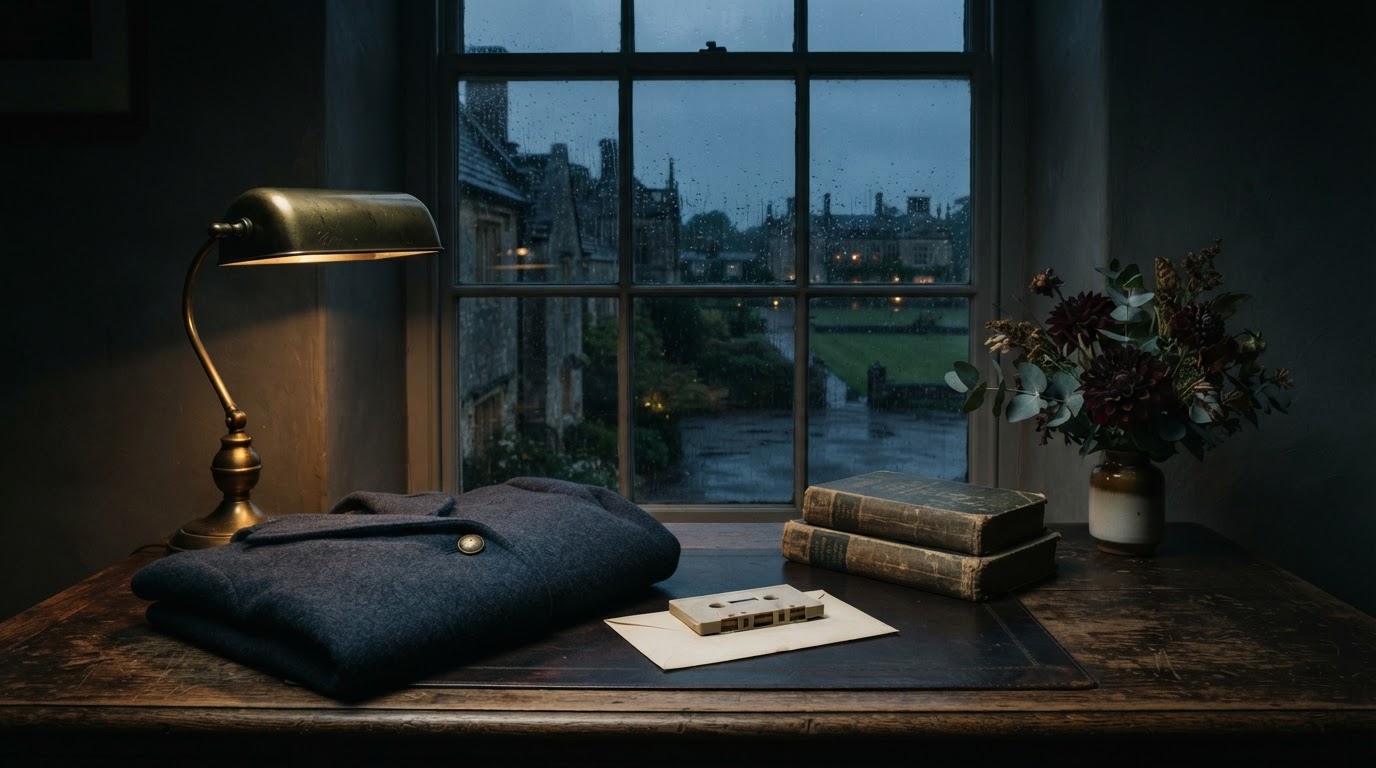
Two original, self-contained stories featuring Mabel Rowe and Iris Bell, followed by a spoiler-conscious evidence notebook for readers of The House in Her Name by Lenora Valerood.
These bonus episodes are set before the events of Book 4 and do not revisit the novel’s central mystery or reveal its late-book discoveries. The main novel remains complete without them.
BONUS STORY 1
The Coat in the Back Room
A Mabel Rowe story, set on Harrow Street before the events of The House in Her Name.
Mabel Rowe knew somebody had made a poor decision when she saw three respectable women standing outside the laundrette and speaking in whispers.
Respectable women did not whisper outside a laundrette in Bristol at nine on a wet Saturday unless there was a romance, a scandal, or an unusually delicate accusation of theft. The women were wearing their charity-shop badges. That narrowed the matter considerably.
The laundrette occupied the ground floor beside the pharmacy, beneath the building where Mabel lived in Flat 3. Its windows were always steamed in winter, and its sign promised QUICK WASH in cheerful letters that had survived longer than the machine bearing the same claim. On ordinary days the place smelled of soap, warm cotton, and somebody else’s dinner. This morning it smelled of wet wool and alarm.
Mabel was carrying a shopping bag with two sweaters she had mended for the neighborhood coat exchange. She had repaired the cuffs on the smaller one, even though the yarn had been troublesome and her knuckles complained of every stitch. The sweaters could keep somebody warm. Her hands could complain later.
“If you’re going to be conspiratorial,” she told the three women, “stand somewhere less transparent. There’s glass behind you.”
Mrs. Pritchard, who coordinated the winter collection, turned so sharply that the badge on her lapel caught in her scarf.
“Mabel. Thank goodness.”
“That rarely comes before good news.”
“There’s a coat missing.”
“People often come here without coats and leave with them. It’s the nature of a coat exchange.”
“We haven’t opened yet.”
That gave Mabel reason to set down her shopping bag.
They were collecting winter clothing for families referred by a local community group. The rules had been decided at a meeting Mabel had not attended, which was usually when the most rules were produced. Nothing was to be reserved for friends. Donated garments would be sorted by size, cleaned when necessary, and placed on racks for the recipients to choose. Nobody would be photographed, and nobody would be asked to explain why they needed anything. Mabel approved of the last two rules. She had more questions about the first.
“What sort of coat?” she asked.
“Navy wool. Child’s size. Yellow stitching inside the left sleeve. Brass button on one cuff. Very good quality.”
“And you saw it here?”
“At eight thirty. I counted everything. At eight forty-five it had gone.”
“Who was here?”
Mrs. Pritchard looked over Mabel’s shoulder toward the pharmacy, where a young man was carrying boxes under the awning.
“There was a boy,” she said. “Helping with the deliveries.”
Mabel closed her eyes for the length of one measured breath.
“His name?”
“Nico. I believe.”
“Then let’s begin by calling him Nico. The other description is doing too much work.”
Inside, the sorting racks stood between the washing machines and a trestle table piled with folded hats. Every garment bore a small colored card, not identifying its owner but indicating size and whether it needed cleaning. A child-sized gap interrupted the coat rack. Above it hung an orange card marked TWELVE TO FOURTEEN. Mrs. Pritchard pointed at the gap as though it might enlarge if somebody looked away.
“There,” she said.
Mabel studied the floor. Dry near the counter. Damp where people had come in from the street. At the back, by a door bearing a notice about staff access, a faint mark of pale blue chalk showed where the rack had been pushed across the tiles. She had seen more dramatic evidence on her own kitchen floor after a bag of flour split.
“Who moved the rack?”
“We all did. To make room for the clothes rail.”
“And the back room?”
“Locked.”
“Was it?”
“Saira checked.”
Saira Nasri managed the laundrette on Saturday mornings. She was a practical woman with a habit of fastening her sleeves above the elbow, as if the whole world might require scrubbing with little warning. At that moment she was kneeling beside a washer and discussing a drainpipe with an expression of exact dislike.
“I’ve got enough trouble with the machines,” she told Mabel when summoned. “If someone has taken a coat, I didn’t see them.”
“Who says someone has taken it?”
“Everyone who’s been talking for ten minutes.”
“Ah. Then you’ve heard the entire investigation.”
Saira stood and wiped her hands. “The back door was shut when I came in. I opened it for the collection van at eight twenty. Closed it after the boxes arrived. Nico carried the boxes. He didn’t take a coat.”
“You sound certain.”
“I watched him. He was trying not to drop a carton of knitted scarves. He couldn’t have concealed a wool coat unless he’d developed a third arm.”
That was sensible. Mabel liked Saira a little more for it.
By ten the rumor had outrun the missing garment. Somebody had seen Nico with a large bag. Somebody else remembered he had been unusually quiet. A third person said the coat must have been worth money, although nobody could explain where the valuation had come from. Mabel had watched ordinary people build a verdict from smaller materials than that, and she found the process more depressing than surprising.
Nico himself was standing under the pharmacy awning, not quite sheltered from the rain. He had dark curls, an oversized green jacket, and the posture of somebody determined not to appear injured. He was seventeen, Mabel estimated, and not a boy in the sense that gave strangers permission to dismiss him.
“Morning,” she said.
“Morning.”
“I hear you’ve been promoted to suspect.”
He glanced up. “I’ve heard worse.”
“That is not the ringing endorsement of local volunteer work I’d hoped for.”
He looked away, then back. “I brought scarves from the community hall. Mrs. Pritchard said to put them beside the dryers. I did. Then I went to get the second load.”
“Did you see the navy coat?”
“Yes. On a hanger. It was wet at the hem.”
“Did you touch it?”
“No.”
He hesitated. Mabel waited, because rushing a pause was how people filled it with what they feared hearing.
“I wanted to,” he admitted. “My sister needs a coat. But I know the rules. The exchange wasn’t open. I thought if I looked at it too long, someone would think something.”
“It seems they managed that without assistance.”
A passing bus threw spray across the pavement. Nico stepped backward into the doorway. A small parcel was tucked beneath his arm.
“What’s that?” Mabel asked.
“Medicine for Mrs. Bellamy,” he said. “The pharmacist asked me to take it upstairs on the way.”
“Which Mrs. Bellamy?”
“The one who lives behind the bakery. She doesn’t get out in the rain.”
Mabel nodded. She knew the woman, and the medicine explained the parcel. What interested Mabel was that Nico had been helping three neighbors while being privately judged for allegedly taking one coat.
“Go deliver it,” she said. “I’ll talk to the people who enjoy decisions more than evidence.”
“You’re not going to make them apologize?”
“Not before I know what happened. An apology based on another guess is a very thin sort of apology.”
Back upstairs, Mabel found the door to Flat 4 open a few inches. The woman who looked after the place was standing inside, a cardigan over one arm. Mabel knew her as Vera when they were alone. She also knew that, in the hall, an entirely different name sometimes arrived on the post. She had learned not to ask a question simply because the answer might satisfy her curiosity.
“You’re out early,” Vera said.
“A coat has performed an escape.”
Vera looked toward the stairwell. “A coat?”
“Not one of mine, fortunately. My clothes barely travel when I’m wearing them.”
Vera made the small, surprised movement at the corner of her mouth that passed for a laugh on difficult days. She was holding a folded blue cardigan, neatly but not naturally, as if somebody had told her exactly how its sleeves should lie.
“Was somebody hurt?” she asked.
“Only the reputation of a young man who was being useful.”
Vera’s expression changed at the word useful. Mabel noticed, then gave the woman room not to explain.
“I’ve to put the kettle on,” Vera said.
“Do it for yourself, love. You don’t owe a cup of tea to every visitor or every question.”
“I know.”
She said it with such determined politeness that Mabel suspected she was still learning.
Downstairs, Mrs. Pritchard had assembled the volunteers around the trestle table and was insisting on a written inventory. Mabel agreed that an inventory was sensible. She disagreed when Mrs. Pritchard began adding the names of everyone who had been alone near the rack. A list was meant to clarify what had been handled, not assign moral significance to who had passed a doorway.
“Perhaps we should ask why the hem was wet,” Mabel suggested.
“It was raining.”
“The other coats were dry. Nico noticed this one was wet at the hem, and he was here after your count. That suggests the coat had just arrived or somebody had put it somewhere wet.”
“You talked to him?” Mrs. Pritchard asked.
“I did. It was surprisingly possible.”
Saira came from the back with a bucket. “There’s a leak in the gutter above the staff doorway. I told them to mend it before winter.”
“Does it splash inside?”
“When the wind’s wrong.”
“Was the wind wrong this morning?”
Saira gave the kind of look a sensible woman reserves for weather and public officials. “It was Bristol weather.”
They examined the staff doorway. Above the threshold, water dripped steadily onto the concrete step. A thin line of blue chalk showed on the floor just inside, and beyond it stood an empty trolley. The chalk, Mabel realized, was not from marking the coat rack. It came from a maintenance worker’s line around a loose drain cover. Somebody had pushed the trolley across it, transferring the powder to its wheels.
The trolley had a damp lower shelf. At its corners were threads of dark wool, caught where the metal had snagged an edge.
“That coat was on here,” Mabel said.
Saira went still for a moment, then rubbed the back of her neck. “I moved it,” she admitted. “When I was clearing the wet floor. I meant to hang it up again, but the delivery came and I needed the trolley. I thought I’d taken the coat off. Clearly I hadn’t.”
“Well, it isn’t here now,” Mrs. Pritchard replied.
“An observation worth preserving.”
Saira crouched and looked at the trolley wheels. “This belongs at the community hall. They borrowed it yesterday.”
“Did anyone move it this morning?”
“I sent it back with the first empty cartons.”
Mrs. Pritchard’s eyes widened. “To the hall?”
“Yes.”
They went together, because Mabel would not allow a second rumor to begin without its first version being put firmly out of business.
The community hall was six streets away, in a brick building whose entrance ramp had been added after a campaign so protracted that Mabel remembered three changes of councillor and two different colors of protest leaflets. Through the door came the smell of floor polish and instant coffee. Folding chairs were stacked beside a noticeboard advertising everything from chair yoga to a meeting about the bus route.
The trolley stood beside the stage. There was no navy coat on it.
Mrs. Pritchard drew in a breath for a new accusation. Mabel lifted one finger.
“First, we ask.”
A volunteer named Anika emerged from the kitchen carrying a tray of plastic cups. When asked about the trolley, she looked at the empty lower shelf and said, “I took the coat off it. It was soaking. I thought it would mildew if it stayed rolled up.”
“Where is it?” Mrs. Pritchard demanded.
“In the little room behind the stage.”
“Why didn’t you tell us?”
Anika looked honestly puzzled. “I was going to bring it back when it dried. Then the caretaker needed help lifting tables and I forgot.”
That was the trouble with ordinary explanations. They seldom fitted the dignity of a conspiracy.
The little room contained two portable heaters, a stack of Christmas decorations, and the missing coat spread over the back of a wooden chair. It was dark navy, still damp along the lower seam. The yellow stitching was exactly where Mrs. Pritchard had said it would be. One cuff bore an antique brass button, while the other had been replaced with a plain black one. Mabel took a moment to run her fingertips along the repair.
“Whoever stitched this loved the person who wore it,” she said.
Anika shifted uneasily. “I thought it should be dry for whoever needed it next.”
“Quite right,” Mabel said.
Mrs. Pritchard stood in the doorway, looking at the coat and then at Mabel. “I suppose I owe Nico an apology.”
“You do,” Mabel said. “But don’t tell him the coat was found as if finding it proves he wasn’t involved. He wasn’t guilty before we found it. That’s the point.”
The woman accepted that with the discomfort of somebody being offered a more demanding standard than the one she had prepared for.
Anika picked up the coat carefully. “There is something else,” she said. “One sleeve lining has torn. I can sew it before the exchange.”
“Ask the organizer,” Mabel said. Then she glanced at Mrs. Pritchard. “And perhaps the organizer can ask whoever donated it, if their contact details are available. A person may have a reason for keeping an old repair untouched.”
Mrs. Pritchard frowned. “Surely a new lining is an improvement.”
“Maybe. But we’re giving away a coat, not editing somebody’s memories without their permission.”
They waited while Mrs. Pritchard checked the donation sheet. The donor had ticked the box allowing repairs and had requested that no personal details be shared with recipients. Mabel smiled at the neatness of that distinction. Permission was a marvelous thing when people remembered to look for it.
By midday, the coat hung on its original rack, the lining securely repaired. Nico returned from his deliveries to find Mrs. Pritchard waiting beside the door. She apologized without conditions, which surprised him more than the allegation had. He accepted without being required to reassure her that she was a good person.
The coat exchange opened at one.
Mabel sat by the table of gloves, where she could rest her hands and still tell anyone who asked that she was supervising. Families came and went without ceremony. A small child selected a striped hat with enormous pompoms. An elderly man found a waterproof jacket that fitted his shoulders and thanked nobody in particular. Nobody photographed him. Nobody asked why he needed it. The rules, Mabel decided, could be quite sensible when somebody remembered their purpose.
Toward the end of the afternoon, a woman and a girl stopped in front of the navy coat. The girl looked thirteen, perhaps fourteen, with the careful expression of somebody who had learned to admire expensive things from a safe distance. She touched the sleeve but withdrew her hand quickly.
“Try it,” her mother said.
“It’s too nice.”
“A coat is meant to be worn.”
The girl slipped it on. It fitted her as though it had been waiting for her shoulders. She lifted her arms, testing the room inside the sleeves, and then found the brass button on the cuff.
“It’s not the same as the other one,” she said.
“No,” Mabel answered from her chair. “Some things stay useful precisely because somebody bothered to repair them.”
The girl’s mother smiled. The coat went out into the rain on the person who needed it.
That evening Mabel climbed the stairs slowly, her knuckles aching. The door to Flat 4 was closed, but a narrow strip of light showed underneath. She knocked once, not too loudly.
Vera opened after a pause. Mabel had learned that pause was not reluctance to welcome her. It was a rule that had lived in the woman’s bones too long.
“Did you find it?” Vera asked.
“We did. It hadn’t been stolen. It had been protected in a way nobody told anyone else about.”
Vera looked down at the cardigan in her hands. “Was that wrong?”
“Drying a coat? Not at all. Accusing somebody because we didn’t know where it had been taken? Absolutely.”
Vera seemed to consider the difference.
“You can do something for someone,” Mabel added, “and still have the decency to let the other people involved know what you’ve done. Sometimes keeping a kindness secret makes life harder for the people you’re meant to help.”
For a moment the landing seemed oddly quiet. Below them, the pharmacy shutter rattled down. A bus sighed at the stop. Someone laughed in the street, and the sound rose through the stairwell with all the ordinary carelessness Vera rarely allowed herself.
“Would you like a cup of tea?” Vera asked.
Mabel looked at her. “Would you?”
The question made Vera blink.
Then she nodded.
Mabel followed her into the small kitchen, carrying no instructions and expecting none. They sat with their mugs while the street darkened outside. The coat had gone where it was needed. Nico’s name had been cleared. There was no greater mystery waiting behind the outcome, no final page to pull from a concealed folder.
Mabel found the absence of that sort of drama wonderfully restorative.
Vera reached for her cup without looking at Mabel for permission. It was a small movement. In another household, nobody would have noticed.
Mabel noticed.
She drank her tea and said nothing about it.
BONUS STORY 2
The Silence at Six Minutes
An Iris Bell story, set during an earlier local-history project, before the events of The House in Her Name.
Iris Bell had been hired to catalogue a collection of voices, and by the second morning somebody was demanding that she account for six minutes of silence.
The collection belonged to a regional local-history reading room housed above a library. Most of it was harmlessly unruly: oral interviews with former textile workers, recordings of a school choir, a local councillor speaking too closely into a microphone, and three cassettes labelled simply WEATHER. The tapes had been made over several decades by volunteers, then placed in drawers with the hopeful expectation that future professionals would make sense of them.
Iris liked that sort of work. She did not like the part where future professionals were expected to make the past more certain than it had been.
On the table before her lay a grey cassette in a cracked plastic case. Its label read ELSIE FENNER — EVENING SHIFT, 1988. Below the name somebody had added, in red pencil, SIX MINUTES MISSING.
“There,” said Daniel Price, the reading room’s new project coordinator. “That’s the problem.”
Daniel was young, brisk, and bright-eyed with the kind of enthusiasm that came from believing most problems could be solved with a spreadsheet. He had secured funding for a digital exhibition called The Sounds of Working Lives. Each recorded interview would be catalogued, edited for clarity, and made available online after a consent review. The work mattered. So did the deadline, which Daniel mentioned so often that Iris had begun to suspect he used it as a unit of time.
“A handwritten note is not a problem yet,” Iris said. “It’s a claim.”
“About a gap.”
“Possibly.”
“The public catalogue says part of the interview was removed.”
“Then we should establish whether anything was removed.”
Daniel folded his arms. “Mrs. Fenner’s son says he wants those six minutes.”
“He wants to hear something he believes exists. That’s not necessarily the same thing.”
“You make everything sound complicated.”
“Most things arrive that way.”
She lifted the cassette case and held it toward the window. The plastic was scratched, but the tape inside looked even. No obvious splice, no broken shell, no sign that someone had pried the case open. It was not proof of integrity, but it was an observation worth recording before the story grew larger around it.
Daniel moved a stack of forms from the second chair. “I spoke to the person who prepared the exhibit. They think it may be something sensitive.”
“Why?”
“Because it was deleted.”
“That’s a conclusion made out of the original conclusion. We need a better ladder.”
He sighed. “Can you listen to it today?”
“That is what I’m here for.”
The reading room had two windows overlooking a narrow street and a clock that ran four minutes fast. The listening equipment stood in a little alcove beside shelves of local directories. Iris had checked the cassette deck before using it and had asked for an older volunteer to demonstrate the temperamental play button. The deck was no longer young; it liked to be given one job at a time.
At ten past ten she began the recording.
A woman’s voice emerged through the headphones, close and dryly amused.
“You want me to tell you what the evening shift was like? Well, the first thing I should say is that nobody ever called it romantic except people who didn’t work it.”
The interviewer laughed. There was a scrape of a chair, the distant clatter of something being put on a table, and then the woman began describing the heat of the workroom and the odd companionship of long hours. Her language was exact. She corrected the interviewer when he said the workers had sung while they worked.
“They sang at breaks,” she said. “During a shift you saved your breath.”
Iris made notes of the topics and listened for the place where the alleged removal occurred. At twenty minutes, the interviewer asked about a dispute between two supervisors. There was a short silence, a chair scraping, and Elsie saying, “No. I won’t discuss that.” The interviewer murmured an apology. The recording continued with the subject of pay envelopes.
That was all.
There was no six-minute span of silence in the audio. No abruptly joined speech, no change in background sound that proved an edit. The tape had run for thirty-nine minutes and twelve seconds from the first word to the last.
Iris played the section again. The small pause had lasted less than four seconds.
She looked at the handwritten label. SIX MINUTES MISSING.
Could the original recording have been longer? Possibly. Could an editor have copied only part of it? Also possible. But the tape itself had not told her what those words claimed.
When Daniel returned, she gave him the facts, and he looked disappointed in the way people sometimes did when the truth refused to be dramatic.
“So someone covered up the argument,” he said.
“We don’t know that.”
“But she refused to talk about it.”
“On the tape. In her own voice. That’s not the same as somebody erasing her voice.”
“Then why write six minutes missing?”
“That’s what we should ask.”
The older volunteer who knew the deck was called Ruth Collier. She had been helping at the reading room for years, first as a visitor, then as the person everyone summoned when a catalogue entry had too many question marks. Ruth remembered the 1988 oral-history project and the volunteer interviewer, a history teacher named Mr. Latham, who had died several years earlier.
“He was conscientious,” she said. “Sometimes he was too conscientious. He thought every life ought to come with a complete account.”
“Did he edit his tapes?” Iris asked.
“He made listening copies. Left the masters in envelopes. As far as I know, he didn’t cut anything.”
“Where were the masters stored?”
“A cupboard that leaked when the roof was bad. Some survived. Some didn’t. That was before the archive moved here.”
Daniel looked pained. “Why didn’t anyone note which were copies?”
Ruth raised her eyebrows. “It was 1988, not the future. We wrote on what we had.”
Iris asked whether the interview sheets survived. Ruth brought out a box of buff folders tied with cotton tape. Each contained a typed introduction, an interview date, a checklist of topics, and, sometimes, a consent form. Elsie Fenner’s file held a single sheet labelled INDEX. Against the subject SUPERVISORS, the interviewer had written STOP 16:10. A little farther down, on the next line, he had written RESUME 16:16.
Daniel pointed immediately. “Six minutes.”
“Six minutes of clock time,” Iris said. “Not necessarily six minutes of tape.”
“Meaning?”
“Meaning the recorder may have been switched off when she said no. The interview continued six minutes later. Those minutes may never have existed as a recording.”
Ruth settled into a chair, breathing a little harder after carrying the heavy folders. “Mr. Latham used to turn the machine off when somebody asked him to. He said silence was part of interviewing too.”
Iris studied the page. The times were written beside two different headings, one for supervisors and one for childhood. The six minutes belonged between topics. That explained the annotation without proving what anyone said during the pause.
“Where did the red-pencil note come from?” she asked.
Ruth thought for a while. “A catalogue volunteer, probably. When the tapes were transferred into the computer system, they needed a note for the gap between the times. Somebody wrote that six minutes were missing, and it stayed.”
“Then the catalogue turned an interviewer’s pause into an apparent disappearance,” Iris said.
Daniel leaned back. “But Elsie’s son thinks the missing section is about his father. He says people are keeping something from him.”
“Do we know whether Elsie agrees with the recording being online?”
“She’s eighty-seven.”
“That wasn’t the question.”
Ruth looked at Iris with sudden appreciation.
“She’s quite capable of answering it,” Ruth said. “She telephoned me last week to complain that the new catalogue has made her sound like a woman who lost something. She said she remembers perfectly well what she decided not to say.”
Daniel’s face colored. “Why didn’t you tell me?”
“You were explaining how urgent the website was,” Ruth replied. “There wasn’t much room for the answer.”
Iris felt that one was worth preserving somewhere other than the minutes of a meeting.
They arranged to visit Elsie Fenner the next morning. Daniel wanted to go with them; Iris suggested that two visitors were enough, and that Elsie should choose whether the second was Ruth or her son. It was not reasonable to arrive in a living person’s sitting room with a committee simply because the archive had created a problem about her name.
Elsie chose Ruth.
Her house stood near a small public garden, the kind with a stone bench, two stubborn rosebushes, and a path that had been relaid around a tree rather than cutting it down. The front door opened before Ruth could knock twice. Elsie Fenner was small, straight-backed, and wearing a pale green cardigan with the air of someone who had been awake long enough to decide how the day would proceed.
“You must be the archivist,” she said to Iris.
“Iris Bell. Thank you for seeing us.”
“I’ve been waiting to hear whether my six minutes have gone to prison.”
Ruth laughed. Iris smiled in spite of herself.
They sat in Elsie’s front room with three cups of tea and an old table fan that was not switched on. Framed landscapes lined the mantel, not photographs of workplaces. Iris noticed but did not ask why. She had been invited to discuss a recording, not to inventory the room’s omissions.
“We think the machine was stopped for six minutes,” she began. “The interview sheet records the times. The surviving audio contains no six-minute silence, and we haven’t found evidence that anybody erased a section.”
Elsie nodded. “He turned it off because I asked him.”
“Do you remember why?”
“Of course. He asked why I didn’t support the walkout. I told him it wasn’t his business.”
Ruth looked at her. “You never said that to me.”
“You never asked.”
A small silence followed. Iris kept it.
Elsie rested her hands on the arms of her chair. “I cared about the dispute. I thought the women who stood up were brave. I couldn’t join them. My mother was ill. The night they went out, I was changing her bedding and trying to persuade her to drink something. I didn’t tell the people at work because I didn’t want them to pity her. I didn’t tell the teacher because he wanted a neat little story about courage.”
“You didn’t owe him one,” Iris said.
“That’s what I thought. Other people thought I was frightened of the supervisors. They may still. I didn’t much care for being thought a coward, but I preferred it to making my mother’s last months an exhibit.”
Iris looked at the carpet while Elsie chose the next words.
“My son believes there’s a scandal,” Elsie said. “He sees a gap, so he fills it with something terrible. He was a child then. I never told him much about those nights with my mother. She was his grandmother, and he remembers her making jam, not being ill. I wanted him to keep that.”
“He may want to know more now,” Iris said. “But he can ask you. The archive shouldn’t pretend to answer for you.”
Elsie’s mouth tightened thoughtfully. “He’s been asking everyone except me.”
Ruth reached for her cup. “That sounds like a son.”
“It does,” Elsie agreed. “But it doesn’t have to be the way we finish.”
Iris explained that the exhibition had not yet gone live. The recording could remain restricted while Elsie considered the choices. The catalogue could be corrected to say there was a six-minute break in the interview rather than an erased section. If Elsie wanted selected excerpts available, she could discuss the terms with the archive. She could also decline publication altogether, subject to the collection’s actual agreements and the institution’s procedures. Iris did not promise powers she had not checked.
“Can they still use the bit about the evening shift?” Elsie asked.
“If the rights and permissions allow it, yes. It makes a vivid account of the work.”
“I say the machinery was noisy.”
“You do.”
“Good. It was. My granddaughter thinks everything in the past was peaceful because the photographs are black and white.”
They went through the surviving consent paperwork. The form was old, brief, and did not clearly describe online distribution. Iris recommended a fresh, plain-language permission discussion rather than treating the old signature as a blanket answer. Elsie asked for copies to consider with her family. Iris gave her no deadline beyond the real one: the exhibit could go ahead without her recording while questions remained.
As they prepared to leave, Elsie asked, “Did you listen all the way to the end?”
“Yes.”
“Then you heard me correcting him about the singing.”
“I did.”
“Thank goodness. That was the most important correction in the whole recording. He wanted us singing while we worked like a picture in a calendar. Most of us were too tired. But when the bell went for the end of a shift, you could hear everybody suddenly become a person again.”
“That is something I would like listeners to hear,” Iris said.
“Then perhaps I’ll record it for you properly. Not with a man who thinks he already knows what I’m going to say.”
“You can decide that after reading the paperwork,” Iris said.
Elsie laughed. “You are hard to recruit into a sentimental ending, Miss Bell.”
“It’s an occupational hazard.”
Back at the reading room, Daniel was waiting at the table with his laptop open. He looked first at the cassette, as if it might now be able to defend its reputation.
“Well?”
Iris handed him a short written account of what the evidence established and what it did not. The six minutes had been an intentional pause in the interview. There was no evidence of an erased recording. Elsie was alive, competent to discuss her experience, and did not want the pause presented as a mystery. The online exhibition should not feature her audio until rights and consent had been clarified.
Daniel read it slowly.
“The headline will be less exciting,” he said.
“It might also be true.”
“You don’t have to say that every time.”
“I find I do.”
He looked up from the page. “Her son will be disappointed.”
“He may be. But disappointment is not evidence of wrongdoing. He can speak to his mother about what he wants to know.”
“And the public?”
“Can learn that oral history includes choices. A person can agree to be interviewed without agreeing to answer every question. The gap between a question and an answer is not automatically ours to fill.”
Daniel was quiet. That was progress.
Over the following week Iris repaired the catalogue entry. She removed SIX MINUTES MISSING and replaced it with a precise description: Recording paused by interviewer at the participant’s request; resumed six minutes later. No intervening audio is known to survive. She added a note distinguishing the 1988 interview sheet from the later digital catalogue and documented that the new entry rested on both the original index and confirmation from Elsie herself.
The wording was less dramatic. It also did less harm.
Elsie’s son arrived the following Tuesday. His name was Peter; he had his mother’s eyes and the tired appearance of someone who had been arguing with a story he had invented because he feared the real one might be worse. He asked Iris if the archive was hiding the truth.
“No,” Iris said. “We’re correcting the description of what exists.”
“But she stopped the tape.”
“Yes.”
“Why?”
“That is a question for your mother, if she wishes to discuss it with you.”
Peter stood by the desk, looking at the cassette through the clear lid of its box.
“She’s all I have left of that time,” he said at last.
Iris understood then why he wanted six minutes so badly. A missing section had seemed like a promise that one last answer might be waiting somewhere beyond the edge of a familiar voice.
“You have her now,” she said. “You don’t have to ask a recording to do the talking first.”
He did not thank her. She did not expect him to. Two days later Ruth said he had visited his mother and stayed for dinner. They had talked about some things and left others alone. Ruth considered that a satisfactory result. Iris agreed.
At the end of the month, Elsie came to the reading room carrying her own notes. She wanted to make a short new recording about the sound of the evening bell. She had read the permission form, amended one sentence herself, and asked that the archive keep the signed version with the audio. This time Daniel sat behind the recorder and checked the levels without asking any leading questions.
Elsie described the great room at the end of a shift: machines winding down, the brief strange weight of silence, a cough, somebody’s laugh, feet moving toward the doors. Then she stopped.
“Is that enough?” Daniel asked.
“It is what I meant to say,” Elsie replied.
Iris made a note of the exact duration. No gap. No imagined scandal. Just an older woman choosing the start and finish of her own account.
When the exhibition opened, Elsie’s new recording was one of its quietest pieces and one of the most listened to. The archive preserved the original 1988 cassette under its corrected description and its appropriate access restrictions. The six-minute break remained where it belonged: not a stolen confession, but a boundary drawn by a woman who had been willing to speak and had also known when to stop.
Iris filed the last consent document and switched off the listening-room lamp. At the door she looked back toward the shelves, where hundreds of voices waited in boxes and plastic cases. Their words deserved careful preservation. So did their pauses.
The clock above the window still ran four minutes fast. She had left a note asking for it to be repaired.
For once, she was not in a hurry to correct it herself.
COMPANION BONUS
The Ashbourne Reader’s Evidence Notebook
A spoiler-conscious companion to The House in Her Name by Lenora Valerood
This notebook is for readers who enjoy following the clues while keeping facts separate from interpretations. It assumes familiarity with the opening situation of Book 4 but does not identify the culprit, explain the final revelations, or resolve the continuing series mysteries. The two original bonus stories above are independent side episodes and do not provide necessary clues to the novel.
Reading order
The Ashbourne Inheritance is a continuing psychological suspense series. For the strongest experience, begin with these volumes in order:
- Book 1 — The Other Beneficiary
- Book 2 — The Fourth Will
- Book 3 — The Estate That Lied
- Book 4 — The House in Her Name
This companion does not summarize the endings of the preceding books. Readers who are new to Ashbourne can return after they have reached the beginning of Book 4.
The people and places at the opening of Book 4
- Clara Ashbourne: the central investigator of her family’s contested history; the name Cora Vale is connected to her earlier identity.
- Rebecca Mercer: a trusted, exacting ally who pushes documents and statements toward clear meaning.
- Iris Bell: an archivist who notices what objects and records can establish—and what they cannot.
- Julian Ashbourne: a member of the Ashbourne family whose dry humor often meets situations no one else can soften.
- Eleanor Ashbourne: Arthur’s surviving widow, whose control of information continues to matter.
- Vera Sallow: the custodian associated with the Bristol flat.
- Mabel Rowe: Vera’s observant neighbor in Flat 3.
- Ashbourne House: the family’s fictional English country estate, where private spaces and administrative records intertwine.
- Flat 4, 17 Harrow Street: the fictional Bristol address maintained under C. Vale’s name.
The list deliberately omits later arrivals and new relationships uncovered during the novel.
The five-column evidence check
When a character finds a document, a clue, or a statement that seems to settle everything, try recording it in these five columns:
| Item or claim | Who created it? | What does it actually prove? | What remains uncertain? | Who benefits from this interpretation? |
|---|---|---|---|---|
| A letter | Identify its writer and date, if established | That someone expressed or recorded certain words | Whether the writer believed them; whether the context is complete | Leave open |
| A property record | Identify its source and authority | How an ownership or account entry was recorded | Who controlled the activity behind the entry | Leave open |
| A remembered conversation | Identify the speaker and listener | That a character recalls a particular exchange | Whether every detail was perceived or recalled accurately | Leave open |
| A household object | Record where it was seen | Its presence and observable condition | Who placed it there and why | Leave open |
This is a reading tool, not a guide to proving real legal matters. In a thriller, even an authentic document can support the wrong conclusion if the reader accepts someone else’s explanation without testing it.
Seven keys, seven useful questions
Key motifs recur throughout the series, but an object is not an answer by itself. When you encounter a key, ask:
- What physical thing might it open?
- Who is said to have kept it?
- Is the label contemporary with the key, or could it have been added later?
- Has anyone shown that the key actually fits a lock?
- Who was allowed to use it, and who was merely allowed to hold it?
- Does possession establish ownership, access, or neither?
- Which earlier assumption changes if the key means something different?
The same method works for a notebook, a tin, a photograph, or a letter. Notice the distinction between a clue being real and the meaning assigned to it being correct.
The atmosphere ledger
In the opening chapters, ordinary sensory details often affect how a scene feels before anyone understands its relevance. Use the prompts below to track the experience without anticipating a twist:
- Rooms: Does a room feel lived in, maintained, abandoned, or staged? Which details create that impression?
- Time: Does a visit happen on a particular day or in a repeated routine? Is the routine comforting, coercive, or both?
- Objects: Which domestic item seems ordinary at first but begins to feel deliberate?
- Silence: Who pauses before answering? Is the pause hesitation, fear, restraint, or an attempt to choose their own words?
- Names: When someone uses a name, are they identifying another person, addressing them, or trying to define them?
- Care: Who offers practical help without demanding an explanation or loyalty in return?
This ledger is deliberately about how the story tells its mystery, not about telling you what the mystery means.
Book-club conversation starters
- Why can a paid bill be more unsettling than a locked door in a psychological thriller?
- How does an old house create authority before anyone inside it speaks?
- When is keeping someone’s belongings an act of care, and when does it become control?
- Does knowing more about a person always give someone the right to make decisions for them?
- What is the difference between a witness being mistaken and a witness being dishonest?
- How does the story use familiar objects to make a place feel unstable?
- Which character seems most attentive to the limits of their own knowledge?
- Why might a person protect a story they know is incomplete?
- What can neighbors notice that institutions overlook?
- How does an unresolved question feel different from an unanswered question that a character has chosen not to discuss?
A note about these bonus stories
The Coat in the Back Room follows Mabel in a modest community dispute before Clara arrives in Bristol. Its concern is not the Ashbourne investigation, but the danger of confusing suspicion with evidence and the value of help offered without humiliation.
The Silence at Six Minutes follows Iris on a separate local-history project. It asks who controls the boundaries of a recorded life and why an archive should be accurate about the difference between silence and erasure.
Neither story reveals the solution to The House in Her Name. The main novel stands complete without them.
Continue exploring Ashbourne
For the complete series reading order and other titles, follow the The Ashbourne Inheritance series link or the Lenora Valerood author link below.
Keep Reading
Explore The Ashbourne Inheritance, discover more books by Lenora Valerood, or browse more Reader Extras at Wonder Shelf Books.

