The Fourth Will
A complete companion to The Fourth Will by Lenora Valerood, from The Ashbourne Inheritance.
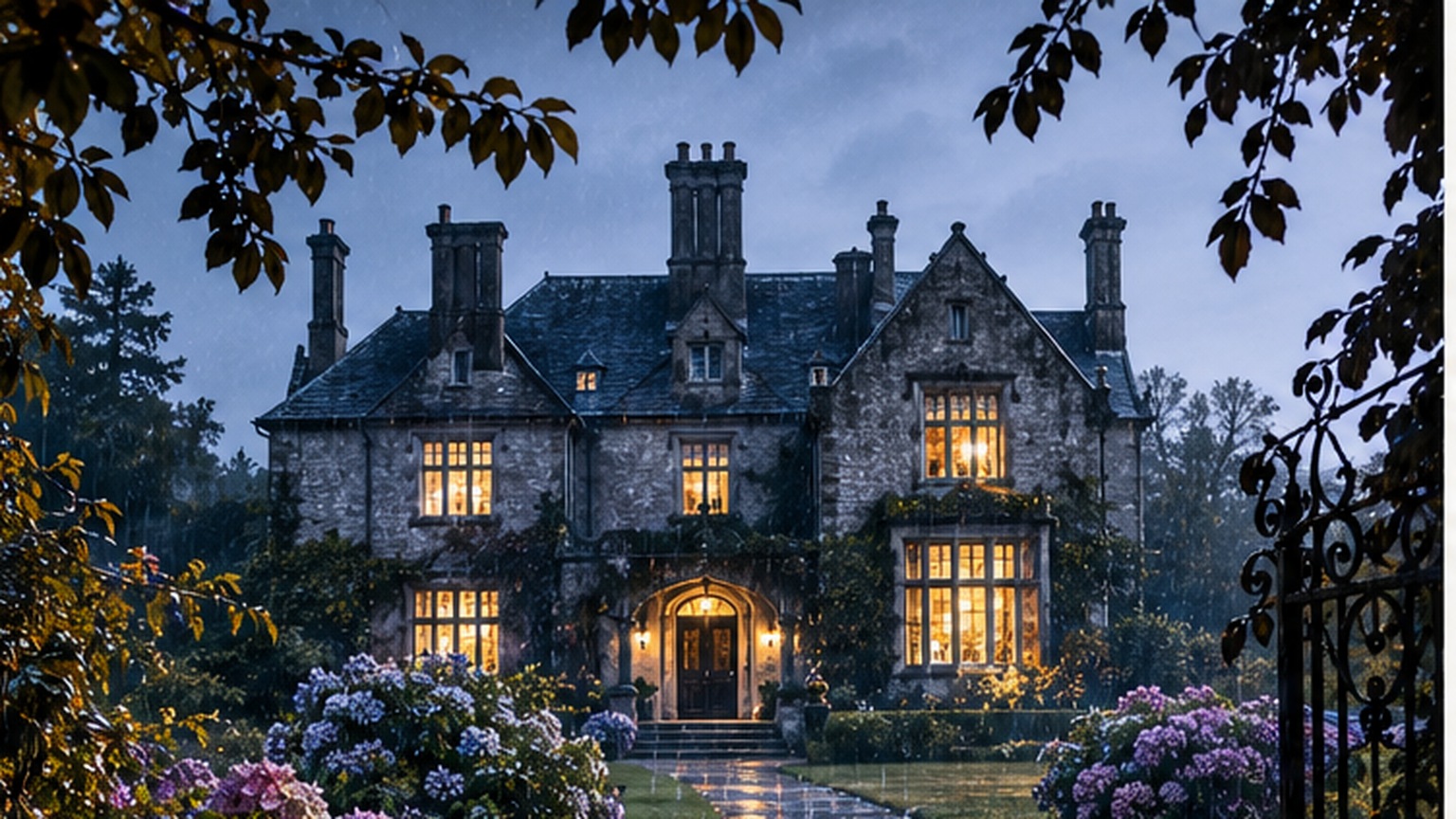
Two complete original stories from the world of The Ashbourne Inheritance, set before the main estate dispute, plus a spoiler-conscious reading companion for Book 2. These independent extras deepen the atmosphere and relationships without answering the novel’s central questions.
Inside this reader bonus:
- Bonus Story 1 — The Porcelain Bird: When a keepsake disappears before a formal reception at Ashbourne House, Clara has to decide whose version of events deserves to be believed.
- Bonus Story 2 — What the Room Was Allowed to Hear: At a Henley benefit, Julian must choose between a smooth public appearance and a speaker’s right to set the terms of her own story.
- Companion Bonus — The Four-Will Reader’s Desk: An early-story comparison chart, character reference, and reading questions for separating evidence from assumption.
These scenes do not repeat or resolve the novel’s inheritance case. Read them as quiet, self-contained moments from before the main series events.
Explore The Ashbourne Inheritance · Meet Lenora Valerood · Reader Extras
BONUS STORY 1 — THE PORCELAIN BIRD
An Ashbourne House interlude, set before the events of The Other Beneficiary. A self-contained story; no knowledge of the inheritance mystery is required.
The little bird had been missing for thirty-seven minutes when Eleanor Ashbourne decided someone had stolen it.
Clara knew the length of time because her mother had consulted the clock twice, and because the staff had become noticeably quieter between the first consultation and the second. In Ashbourne House, silence did not mean nothing was happening. It meant that whatever was happening had acquired the additional burden of being watched.
The porcelain bird was hardly large enough to deserve a search party. It was a pale green wren with a white throat and a tiny, improbable gold eye. For years it had stood in a glass-fronted cabinet outside the morning room, among objects the family did not use and Eleanor nevertheless insisted were indispensable. At some distant point the bird had belonged to someone with a fondness for small decorative things. Its monetary value was uncertain; its importance, according to Eleanor, was not.
“It was here at eleven,” Eleanor said.
She stood beside the open cabinet wearing a cream blouse with sleeves too immaculate for a house preparing to receive sixty guests. In the drawing room, flower arrangements were being carried toward tables. Through the window, a hired gardener fought a losing argument with a damp length of bunting.
“At eleven precisely?” Clara asked.
“At approximately eleven. Don’t make yourself tiresome.”
“I’m asking when you last saw it.”
“You’re behaving like a solicitor.”
“A remarkable consequence of becoming one.”
Eleanor ignored this. “The cabinet was opened for dusting. It was closed afterward. Now the bird is gone.”
Clara looked at the other objects. Three small bowls stood in a symmetrical group. An enamelled box balanced at the center of the upper shelf. An old photograph had been placed behind a silver frame that hid most of the picture. Between a small lacquer box and a blue pottery dish was a clean oval in the dust.
“Who dusted it?”
“Mara. One of the temporary girls.”
Higgins, who had remained beside the door in the patient posture of someone paid not to interrupt, said, “Miss Shaw was helping with the flowers after breakfast, Mrs. Ashbourne. I believe Mrs. Pike took care of the cabinet.”
Eleanor turned her head. “Then perhaps Mara handled it when she brought the flowers through.”
It was impressive, Clara thought, how quickly a possibility could be made to resemble a fact when spoken by someone accustomed to being obeyed.
“Let’s ask them,” Clara said.
“We cannot have an interrogation while people are arriving.”
“Then we shouldn’t have an accusation.”
Her mother regarded her as though the distinction were at best impolite. “I want it back before the doors open. That’s all.”
It wasn’t all, of course. The autumn reception was not an ordinary gathering. A local restoration fund had asked to use the grounds for a private evening to raise money for repairs to an old riverside footpath. Eleanor had offered Ashbourne House with a flourish that made the arrangement sound generous while ensuring every planning decision passed through her hands. The food would be served in the drawing room. A photographer would capture the guests in front of the west windows. The village committee’s chair had been given fifteen minutes for a speech, reduced by Eleanor to six.
And on a side table near the refreshments would stand a small display of local decorative pieces, including the porcelain bird. It had once been used on the printed invitation, enlarged to a size far more imposing than reality.
“If you want the bird found,” Clara said, “give me fifteen minutes without telling anyone who you suspect.”
“You have twelve.”
“Then I’ll have to be unusually efficient.”
Higgins lowered his eyes. Clara suspected he was hiding a smile. Her mother had never understood how easy it was to recruit an ally by being the only person in the room willing to distinguish the possible from the proven.
Clara went first to the kitchen passage, where the reception staff had built an improvised kingdom of trays, stemmed glasses, and white linen. Mara Shaw was carrying a box of miniature lemon cakes. She was young, with a face that seemed to expect reprimands before they had been delivered.
“Miss Ashbourne,” she said, setting the box down too quickly. “Is something wrong?”
“A small object is missing from the cabinet. I’m trying to work out where it went.”
Mara’s eyes flicked toward the hall. “Mrs. Ashbourne asked whether I’d been there.”
“Were you?”
“I brought the hydrangeas into the morning room. I left them on the sideboard. I didn’t touch the cabinet.”
“Did you see anyone else?”
“Mrs. Pike, with a cloth. And Mr. Tanner from the committee. He was measuring the table.”
“Measuring it for what?”
“The display. He said the bird had to be where people could see it from the doorway.”
Clara considered this. “Did he carry anything?”
“A cardboard carton. It had rope handles, or string, something like that.”
“And after that?”
“I went back for the cakes.”
Mara paused, visibly assembling the courage to ask a question whose answer she thought she already knew. “Will they say I took it?”
“Not on the evidence we’ve got.”
“They don’t always need evidence.”
The bluntness of it made Clara turn. Mara continued to look at the boxes rather than at her.
“I did a private dinner here last winter,” she said. “A lady lost an earring. Everyone looked at us until she found it in her coat. She said she was so relieved, as though relief was the same as an apology.”
Clara felt a prick of shame that the story was new to her. The house had rooms she knew intimately and injustices that passed through them without leaving a mark she had thought to notice.
“Did the earring belong to my mother?”
“No. One of the guests.”
“I see.”
The answer was not sufficient, but nothing she might say in the kitchen passage could make it sufficient. She asked Mara to continue with the cakes and went to find Mrs. Pike.
Mrs. Pike proved to be a practical woman in a brown dress who approached dusting as if correcting the moral failings of furniture. She had polished the cabinet’s glass, she said, but not its contents. Eleanor had instructed her not to disturb anything small enough to break.
“Was it locked when you finished?” Clara asked.
“No, miss. I left it open because Mr. Tanner said he was taking two pieces for the exhibition table.”
“Two?”
“The bird and the enamel box. Though he said the box wasn’t wanted in the end.”
“Did you see him remove the bird?”
Mrs. Pike set her cloth down. “I saw him looking at it. Then somebody called me away.”
“Did he put it in the carton?”
“I can’t say.”
There it was: a careful answer, one that admitted the limits of seeing. Clara wished her mother would listen to people who spoke that way. Instead, Eleanor tended to mistake certainty for competence even when certainty had been invented on the spot.
Julian arrived at the front door carrying a paper bag from the bakery and the expression of a man who had expected a different sort of afternoon. His hair was damp. There was mud on one shoe. He took one look at Clara’s face and said, “Nobody’s died, then.”
“Not so far.”
“An encouraging opening to a party.”
“Have you seen Mr. Tanner?”
“If he’s the small man who keeps explaining to everyone that he’s in charge, he’s outside yelling at a ladder.”
“Can you ask him to come inside?”
Julian glanced at the cabinet. “What have we lost?”
“A porcelain bird.”
“Naturally. This is the sort of family emergency for which we should all have rehearsed.”
“Julian.”
His smile faded as he saw that she was serious. “All right. I’ll fetch him.”
Clara went back to the display table. White cloth covered its surface. Three borrowed bowls had been arranged around a small wooden stand. A folded card, printed with the fund’s name, leaned against a vase. On the cloth, where the bird ought to have been, was a faint green smear. It might have been from the base of the object, or from foliage, or from someone setting down a damp carton. She looked closer. Tiny fibers had caught at the rough seam along the table’s edge. Green twine, fraying from some package.
Behind the table the windows stood open a few inches. The air smelled of wet leaves. A light draft lifted the corner of the cloth and settled it again.
Mr. Tanner entered with Julian behind him. Tanner’s jacket was unbuttoned and his cheeks had the blotchy color of a man required to solve too many problems simultaneously.
“I’m told there’s been a mix-up,” he said. “We can hardly have a crisis about an ornament when the speakers aren’t working.”
“We may not have a crisis,” Clara said. “We’re only trying to find it. You moved the bird from the cabinet?”
“I was asked to arrange the display.”
“Did you move it?”
He frowned. “Yes. Well, I intended to. We had to put a runner under the stand. I took everything off first.”
“Where did you put it while you changed the cloth?”
“In a carton. By the side door.”
“Is the carton still there?”
Tanner hesitated. “The gardener was supposed to take the cartons outside.”
“Which gardener?”
“A chap in a green waterproof. I don’t know his name.”
Julian sighed. “That’s half the county this morning.”
Clara asked Tanner to show her the side door. The corridor beyond it smelled of cold stone and potting compost. Several empty boxes had been stacked against the wall. A roll of green twine lay on a shelf, and beneath it stood one flattened carton with two square marks where a heavy object had rested. The marks were too wide for the bird.
“I didn’t pack it with the heavy things,” Tanner said sharply. “I know it was fragile.”
“I’m glad. Did you put any label on the carton?”
“Yes. ‘Display.’”
“Was the word written on the side or the top?”
He blinked. “On the side. Why?”
“Because the boxes here have their labels on the top.”
Julian bent to look. A little of his theatrical laziness vanished. “And the twine doesn’t match. Those are tied with white cord.”
“Exactly,” Clara said.
Tanner stared at them. “Someone must have taken mine.”
“Perhaps. Let’s find out who.”
They stepped into the gravel courtyard. Two tables had been set near the greenhouse for the garden committee’s plant sale. A gray van was parked beyond the gates. Rain had stopped, leaving the garden smelling rinsed and metallic. The gardener in the green waterproof was kneeling beside a pot of lavender, pressing the soil around its roots with a small wooden tool.
“Have you seen a carton marked ‘Display’?” Clara asked.
He stood and wiped his hands. “There was one by the service door. I thought it was for the plant stall.”
“What did you do with it?”
“Put it in the van.”
“Is it still there?”
“Should be.”
He opened the rear doors. Inside were folded trestles, muddy pots, a watering can, and half a dozen cardboard cartons. One bore the word DISPLAY in neat black capitals along its side. Julian climbed in to retrieve it, nearly striking his head on a low crossbar.
“Not built for heroic entrances,” he remarked.
Clara waited until the box was on the gravel before opening it. At the top was a nest of tissue paper. Beneath lay the enamelled box from the cabinet, the blue pottery dish, and a bundle of handwritten labels for the plant sale. The porcelain bird was absent.
Mr. Tanner’s relief lasted less than a second.
“This is ridiculous,” he said. “I remember putting it in there.”
Clara looked at the tissue. The top sheet was creased, but not in the shape of the bird. There were two small hollows, side by side, and a broader indentation beside them. The arrangement suggested a dish and an enamel box. She lifted both objects; the indentations matched.
“Perhaps you meant to put it there,” she said, “and didn’t.”
“I know what I remember.”
“None of us remembers every movement of our hands.”
“My committee can’t afford to lose anything lent by the family.”
“Nor can the staff afford to be blamed for what you intended to do.”
He opened his mouth, then shut it. That, Clara thought, was as much acknowledgment as she would get without a witness.
They retraced the route to the house. At the side door she looked again at the green fibers. The bird had been on the display table after Tanner opened the carton—at least, something glazed had touched the cloth. The fibers suggested a package had snagged there. What other object had been carried past the table that morning?
Mara met them in the passage, empty cake tray in her hands. “Someone’s asking for Mrs. Ashbourne.”
“Tell her we’ll be a minute,” Clara said. “Mara, when you brought the flowers in, was anyone with you?”
“Mrs. Pike came through first. Then a lady with a long wrapped thing.”
“What sort of thing?”
“A board, maybe. Like the ones they use to display a photograph.”
Mrs. Pike, overhearing from the morning room, said, “The committee brought a painting. Mr. Tanner said it should go above the mantel. Mrs. Ashbourne wouldn’t allow nails.”
Clara looked toward the drawing room. At one end stood a framed photograph of the repaired riverside steps before the flood had damaged them. It had not been there the previous evening. A length of green twine lay beneath the frame, partially hidden by its wooden foot.
The painting—photograph—had been set down on the table while the organizers worked, then lifted again. Clara examined the stand. Its supports were rough, made to fold flat for travel. Between two wooden slats hung a small scrap of tissue paper. She touched it. It matched the tissue in Tanner’s carton, but thicker and slightly crumpled.
Julian came to stand beside her. “You have the look.”
“What look?”
“The one you get when a witness has accidentally told the truth.”
“Do you know where the picture was kept before it was hung?”
“Behind the screen in the blue sitting room. The committee made a little mountain of things there.”
Clara crossed the hall, with Julian following and Tanner trailing like a man who regretted joining his own investigation. The blue sitting room was empty, its furniture pushed back against the walls. A folding screen stood near the fireplace. Behind it, flower vases, spare place cards, wrapped trays, and a length of old fabric had been piled with the desperate optimism of people hiding their mess minutes before guests arrived.
There, tucked under the folded fabric, was a broad piece of tissue wrapped around something small.
Clara lifted it slowly.
The porcelain bird emerged intact, gold eye catching the light. It had been placed on a folded napkin to keep it from the floor, then moved with the other objects when the picture stand was fetched. No theft. No elaborate plot. Only a hurried morning, several people taking responsibility for different pieces of the same table, and one small decision nobody remembered making.
“I put the frame behind the screen,” Tanner admitted.
“And I helped you take the fabric off it,” Julian said. “The bird must have been on the cloth.”
“You didn’t see it?” Clara asked.
“Not if it was wrapped.”
“Then we have our answer.”
Tanner reached for the bird, but she did not hand it over. “One more thing. Eleanor will want to know who took it. When you tell her, you will tell her that no member of staff removed it from the house.”
“I never said they did.”
“You left her with that impression.”
“Your mother gives herself impressions.”
“Then this is a good occasion to correct one.”
The words hung between them. Tanner glanced toward Julian, seeking rescue, but Julian was studying the rough fold in the tissue with a seriousness Clara had seldom seen him extend to family matters.
“She has a point,” he said. “Several, actually. She’s annoyingly equipped.”
They returned to the cabinet. Eleanor had been joined by two guests in dark coats and a woman from the local committee. The doors to the drawing room were already open, and conversation came through in polished fragments.
Clara placed the bird on the shelf, exactly where the dust told her it had stood.
“Found,” she said.
Eleanor’s expression softened by an amount a stranger might have mistaken for warmth. “Where?”
“In the blue sitting room, where it was put during the display preparations.”
“Who put it there?”
“The committee’s materials were moved several times. No one was stealing anything.”
“I didn’t say—”
“Mara was questioned,” Clara interrupted quietly. “She has a right to know the matter is finished.”
The committee woman looked away. Eleanor held Clara’s gaze for a moment long enough to make the room feel colder.
“If you’re determined to make a spectacle,” she said, “there are guests to entertain.”
Clara turned toward the door. “Then let them be entertained.”
She found Mara setting out the lemon cakes in strict rows. The young woman looked up so quickly that one paper case slipped from her fingers.
“The bird was misplaced during the display setup,” Clara said. “We found it intact. Nobody thinks you took it.”
“Mrs. Ashbourne?”
“She knows what happened.”
Mara searched Clara’s face for the part of the answer that had been withheld. She seemed to know that an institution could acknowledge a mistake without ever naming the people injured by it.
“Thank you,” she said.
“You made these?”
“The little cakes? Yes. We had to redo the icing twice.”
“They’re very good.”
“You haven’t tasted one.”
Clara took a cake and bit into it. The lemon was sharp, the sponge soft. “Now I have. Still very good.”
At the other end of the passage, Higgins appeared with a fresh tray of glasses. He looked from Clara to Mara, understood without asking, and offered the smallest possible nod. For the first time that day, Mara smiled.
Outside, the guests praised Eleanor’s generosity, her elegance, and the house’s unblemished charm. Inside, the servants carried the trays that made such a story possible. By evening the fund would have raised a useful sum, the committee would have photographs, and the porcelain bird would once again be secure behind its glass.
Clara stood in the doorway with her remaining mouthful of lemon cake and watched her mother receive congratulations beneath the portrait of an ancestor whose name nobody had bothered to check. The bird would be called a harmless misunderstanding. That was fair, as far as the object was concerned. It was less fair to the people who had spent thirty-seven minutes under suspicion.
Julian came up beside her and offered a glass of water.
“The culprit was a folding screen,” he said.
“An exceptionally cunning one.”
“Do you want me to tell Mother I helped move the fabric?”
Clara looked at him. Julian was already preparing the half-smile he used to make discomfort sound like a joke. But beneath it was something more substantial: he was offering to accept blame no one could profit from.
“Yes,” she said. “Not because she needs another culprit. Because you remember now.”
His smile went out. “You make the simplest things sound difficult.”
“Sometimes difficulty is what they’ve been hiding.”
He took his glass back. After a moment, he crossed the room to Eleanor.
Clara couldn’t hear what he said. She saw him lean down, speak briefly, and straighten again without laughing. Eleanor replied with a flick of her hand, dismissive enough to be visible across the room. Julian did not argue. He merely stood there a moment longer, allowing the words to remain said.
It was a small event. A harmless ornament, a rushed reception, a wrong assumption. Nothing changed about Ashbourne House by the time the final guest departed. Eleanor would continue to believe that order had been maintained because she had demanded it; Higgins would continue to carry the glasses; Clara would return to her own work, where documents and witnesses were meant to protect people from exactly this sort of convenient certainty.
But the next morning, as she prepared to leave, Mara found her beside the kitchen door.
“I wanted to tell you something,” she said. “I thought I might never come back here. After the earring, I promised myself that if it happened again, I’d go.”
“And now?”
“Now I’d come back for the kitchen work. Not for the cabinet.”
Clara smiled. “An entirely reasonable distinction.”
Mara hesitated. “I wish people knew what a difference it makes when somebody asks what you actually saw.”
“They should.”
“Most don’t.”
Clara had no persuasive answer. She watched Mara return to the kitchen, moving with the brisk certainty of someone who finally trusted the floor beneath her.
Beyond the windows, the grounds were bright after rain. In the cabinet, the porcelain bird stood small and undisturbed, its gold eye fixed on nothing. Clara glanced at it once before going out.
She did not mistake its return for justice. But she had learned that a small misunderstanding could be settled without making a smaller person pay for it. She intended to remember the difference.
BONUS STORY 2 — WHAT THE ROOM WAS ALLOWED TO HEAR
An independent Julian Ashbourne story from before the inheritance dispute. It has no bearing on the estate or the central mystery.
Julian had been promised five minutes on a stage and a glass of something afterward. The promise had sounded fair until he discovered that the stage belonged to a building determined to leak, the five minutes belonged to a man with a microphone, and the glass of something afterward would be served only if the roof held until nine.
He arrived at the small hall near the river in Henley shortly after six. Rain had swept the pavements clean and left dark beads on the painted doors. Inside, volunteers were unfolding chairs in straight lines that resisted the room’s crooked walls. An old upright piano stood under a cover beside the stage. Someone had set a bucket beneath a stain in the ceiling and hidden it behind a palm large enough to make the arrangement look almost deliberate.
“Mr. Ashbourne?”
A man in a burgundy waistcoat hurried toward him with a sheaf of printed programmes. He had the pale, purposeful face of someone who had taken responsibility for an evening and spent every hour since wishing it belonged to somebody else.
“Julian,” Julian said. “Unless we’ve already reached the part where I’m in trouble.”
“Philip Morrow. I chair the restoration appeal. Thank you for coming. Your mother was most helpful when we discussed the opening remarks.”
“That explains the five minutes. She must have negotiated down from thirty seconds.”
Morrow smiled as though he had been warned in advance that humour might be necessary. “You’re introducing our guest reader. Mrs. Imogen Marr. The audience knows her from local events. She worked with the old telephone exchange for years, though tonight she’s reading something quite different. A memory of the river.”
“I can introduce someone who remembers a river.”
“We have a sponsor attending as well. Mrs. Dean. Her firm is supporting the roof fund. We must make a good impression.”
Julian looked at the bucket behind the palm. “Then perhaps we should move the palm. It seems to be admitting everything.”
“We have a plan.”
There was a particular tone in which people said that sentence, suggesting that the plan had already survived too many objections to tolerate another. Julian knew it from family dinners. He followed Morrow to the stage, where a young sound technician was checking a bank of small switches. Her hair was cut bluntly at her jaw, and she was holding a cable between two fingers as if deciding whether it deserved one last chance.
“Naomi,” Morrow said, “this is Mr. Ashbourne. He needs the lectern microphone. No delay, no trouble, nothing theatrical.”
“That eliminates most of the venue,” Naomi said without looking up.
Julian liked her immediately.
“And Mrs. Marr?” Morrow asked.
“Waiting in the green room. She asked about the feed.”
Morrow’s shoulders stiffened. “I explained that.”
“She asked again.”
“We have a few technical details to settle,” Morrow said to Julian. “Make yourself comfortable.”
He strode away before Julian could ask which details.
Julian looked at the equipment. A narrow red lamp glowed on a small black box beside Naomi’s elbow. Another screen showed an empty stage from high above, the chairs becoming parallel rows in the frame.
“Are we filming this?” he asked.
Naomi hesitated long enough to answer without speaking. “Someone is expecting a live stream.”
“Someone?”
“Mr. Morrow. And the sponsor, apparently.”
“Apparently is doing heavy work there.”
Naomi lowered the cable. “Mrs. Marr said she agreed to speak only if there wasn’t a recording. Mr. Morrow says the sponsor expects a recording. I don’t know whose promise outranks whose, and I’m not paid enough to decide.”
“Nor am I,” Julian said. “In fact, I’m not being paid at all. Which makes my qualifications even better.”
She gave him the faintest smile. “The tally light comes on when the feed is active. I’ve left it in test mode. Nothing is going out yet.”
“Yet.”
“Yet,” she agreed.
Julian went to the green room. The corridor was narrow and lined with framed photographs of past productions: children in paper crowns, choirs arranged under cardboard stars, smiling committee members holding enormous novelty cheques. At the far end, a door stood half open. He knocked.
“Come in,” a woman said.
Imogen Marr sat at a small table with a glass of water and a folded sheet of paper before her. She was perhaps in her late seventies, composed in a navy dress that had been carefully pressed. She wore no jewellery except a plain gold ring. Her reading glasses hung on a cord beside her collar; she did not look at Julian through them.
“You’ve been sent to persuade me,” she said.
“I’ve been sent to introduce you. The persuading appears to be an optional extra.”
“Mr. Morrow told me there would be no recording. Now there is a camera above the stage.”
“I saw it.”
“And?”
“It’s in test mode, according to Naomi. That doesn’t answer why it’s here.”
Imogen tapped the folded sheet with one finger. “I wrote this for the people who remember the old crossing, the river in winter, the noise the footpath made under a bicycle. The hall asked for something personal. I agreed. I did not agree to become a recording people can cut into fragments.”
“It’s your work.”
“It’s my voice as well. People forget voices belong to someone. They think that because a person has agreed to speak, the sound may be taken home like a souvenir.”
Julian remained by the door. His first instinct was to solve the problem by promising that Morrow would behave. But his mother had trained him in the practical limitations of promises made on behalf of other people. They were comforting at the moment of speaking and usually worthless at the moment they mattered.
“Do you want to leave?” he asked.
“I want to read it.”
“Then what do you need?”
“A room in which the words finish when I finish speaking.”
The precision of the answer unsettled him. In the Ashbourne family, words did not finish when they were spoken. They went on being quoted, revised, softened, weaponised, or silently treated as if they had never existed. Julian had spent much of his adult life avoiding definitive statements because every one seemed to acquire a longer life than its author intended.
“I can ask the technician to turn it off,” he said.
“You can ask. But can you keep it off?”
He could not answer quickly. Imogen looked at his expression and nodded once, as if she had expected exactly that.
“Tell Mr. Morrow I will decide after I see the room,” she said. “Not before.”
Back in the hall, the audience had begun arriving. Damp coats were carried toward a makeshift cloakroom. Morrow’s volunteers moved among the chairs, checking that the front row had enough space for Mrs. Dean and her guests. The sponsor herself stood at the entrance speaking to two committee members, a tall woman in a charcoal suit with shoes far too elegant for the building’s uneven floor. She glanced up as Julian approached and offered a professional smile.
“You’re the Ashbourne gentleman,” she said. “I understand you’ll say a few words.”
“If the roof permits.”
“I hope they’re thanking the people who kept this place going. My grandmother performed here. Long before my time.”
“Then you have a better claim to the stage than I do.”
She laughed. “I wouldn’t dare. I can’t sing a note.”
“Tonight seems to be mostly speaking. We may be spared.”
Julian continued toward Morrow, who was arranging a set of cards at the lectern.
“We have a problem,” Julian said.
“I know. The blue chairs don’t match the red ones. The committee insists nobody will notice.”
“Mrs. Marr doesn’t consent to being filmed.”
Morrow stopped touching the cards. “She consented to a public reading.”
“Those aren’t the same thing.”
“Don’t be literal, Julian. A live stream is simply a way for supporters who can’t attend to see what they’re funding.”
“And a recording?”
“It may be useful for the appeal.”
“Did you ask her?”
“We discussed the possibility some time ago.”
“She says you promised not to record.”
Morrow looked toward the entrance. Mrs. Dean was speaking to a cluster of donors. “If she changes her mind at this stage, she’ll put us in an impossible position.”
“Perhaps the impossible position began when you made two promises that contradicted each other.”
Morrow’s face flushed. “You don’t understand how much the sponsor has made possible. We have a short window. We must show reach and engagement. Nobody funds a building because forty people sit in it listening to reminiscences.”
“People used to fund buildings for exactly that reason.”
“Times change.”
“So do agreements. They still have to be agreements.”
Morrow leaned closer. “Your mother understands these matters. She told me one must occasionally put the good of an institution ahead of an individual’s preferences.”
Julian heard Eleanor’s voice in the sentence so clearly that for a moment the draughty hall felt like the drawing room at home. The phrasing had been delivered through a stranger, polished by travel and made respectable by its appearance in another mouth.
“My mother has an extensive theory of institutions,” Julian said. “I’m not sure the people inside them would always approve.”
Morrow drew himself up. “We cannot cancel the stream now.”
“Have you asked Mrs. Dean if it’s essential?”
“She supports the appeal. She is expecting publicity.”
“That’s not what I asked.”
“I don’t intend to embarrass her.”
“Nor should you. Ask her a straightforward question.”
Morrow shook his head. “You’re making this difficult.”
“I’m beginning to suspect the difficulty was already here.”
At seven, the hall lights dimmed for rehearsal. Naomi tested the microphone, then the camera. On the screen the empty chairs filled with blurred dark coats; one or two guests raised their heads toward the little red lamp, curious about being seen. Imogen entered at the back with her folded page in hand. She stopped when she saw the camera above the stage and stayed very still.
Julian went to her. “It hasn’t begun.”
“But it will, unless somebody says otherwise.”
“I think you’re right.”
“People say I’m old-fashioned when I ask not to be recorded. Perhaps I am. I’m not afraid of being heard, Mr. Ashbourne. I’m afraid of being edited into a person who said something else.”
He watched a volunteer in the front row hold up a phone to take a photograph of the stage. It was impossible to stop every device in the room. But impossibility was not an argument for abandoning a promise; it was an argument for being clear about its limits.
“What if we announce that this particular reading isn’t being filmed,” he said, “and ask people not to use their phones during it? We can’t guarantee what strangers do. We can make our own policy honest.”
Imogen considered. “And the camera?”
“Off. Not pointed away. Not on mute. Off.”
“If it stays off, I’ll read.”
He offered her a chair near the side of the hall, where she could see the technician’s table without sitting in the attention of the front row. Then he went to Naomi.
“Can you disable the entire stream for the reading? Not just the audio.”
“Yes. It’s a switch. Two switches, actually, and the uplink cable.”
“Will Morrow know?”
“The screens go blank. He’ll know.”
“Good. How can the audience know?”
Naomi thought for a moment. “I can put a card on the lectern while we’re not broadcasting. ‘Live room only.’ And you can say it.”
“Would you be prepared to show Mrs. Marr that the feed is disconnected?”
“Of course.”
Morrow materialised beside them. “What is going on?”
“We’re making the reading live only,” Julian said.
“You cannot make that decision.”
“I can’t make it for her. Neither can you. She has made it already.”
“Mrs. Dean will expect the stream.”
“Ask her.”
“I will not be bullied in my own hall.”
“Then don’t bully anyone else.”
Morrow stared at him. Naomi lowered her eyes toward the console. Julian felt the unpleasant pressure of being conspicuous, the old temptation to replace confrontation with a joke. He did not like himself much at moments like this. He liked even less that the preference for avoiding discomfort made it so easy to leave someone else carrying it.
“I’ll speak to Mrs. Dean,” he said. “If you’re worried about appearances, I’ll take responsibility for the change.”
“You will be undermining the appeal.”
“Perhaps. But if the appeal requires pretending someone gave permission she didn’t give, it has a bigger problem than publicity.”
He walked away before Morrow could find another argument that sounded like a duty.
Mrs. Dean listened without interrupting while Julian explained. The room had filled by then, and people were finding seats with the wet rustle of coats and programmes. He expected annoyance. She looked instead toward the stage, where Imogen sat quietly beside the wall.
“I was told the event would be streamed,” she said. “I wasn’t told there was a dispute about the reader.”
“Morrow may have thought it a minor technical matter.”
“Do you?”
“No.”
“Nor do I.” She glanced at her watch. “My office wanted an online recap for the appeal, yes. I imagine they’ll survive an account of the roof without claiming ownership of a woman’s memories.”
“Will you tell Morrow that?”
“I’d rather tell him myself.”
Julian let out a breath he had not intended to hold. “Thank you.”
Mrs. Dean moved toward the committee chair with a determined step. Morrow’s expression changed in stages as she spoke: hope, bafflement, resistance, then the defeated surprise of a man who had built an entire argument around a preference nobody had actually expressed.
At twenty minutes past seven, Naomi invited Imogen backstage. Julian followed at a distance. The technician lifted the black uplink cable from its socket and showed Imogen the blank screen. She turned off the recording function and waited until the red light went dark.
“Nothing can leave from this machine while that’s disconnected,” she said. “There’s no local recording running either.”
Imogen nodded. “Thank you.”
Then she looked at the row of audience seats visible through the curtain. “I know I can’t stop somebody with a telephone. I know that. But I wanted someone to care enough to ask.”
“It’s your choice,” Naomi said. “If you change your mind, we don’t start it again.”
Morrow appeared with a revised programme card. The printed order of events remained unchanged, though a handwritten note in his margin now read unrecorded segment. He avoided looking at Julian.
“We begin in five minutes,” he said. “There’ll be an announcement before Mrs. Marr.”
“An honest one?” Julian asked.
Morrow made a thin noise that might have been a laugh. “One you will deliver.”
The first part of the evening went almost smoothly. A committee member described the hall’s roof repairs. A local architect spoke about beams and drainage, revealing to an appreciative audience that a building could contain more structural surprises than a marriage. Mrs. Dean said a few words about why places mattered to families who had used them. Then Julian was called forward.
The lights above the stage were softer than he expected. He could see the first three rows clearly and the rest as a blurred field of faces. A trace of rain reached him through the ceiling, faint and steady.
“I was told to make an introduction,” he began. “It turns out I have two things to say first. The first is that the roof has survived this far, which should encourage everyone who has donated to its future.”
A scatter of laughter moved through the hall. He waited for it to fade.
“The second is more serious. Our next guest has kindly agreed to share a personal memory with the people here tonight. At her request, this part of the evening will not be recorded or streamed. We ask you to put your phones away while she speaks. We cannot make that decision for every person in the room, but we can tell you what she has asked of us, and we can respect it.”
The silence that followed was brief and not entirely comfortable. Several people lowered their phones. An older man at the side shook his head, then tucked his device into his jacket pocket. No one applauded the announcement, and Julian was glad. A simple courtesy should not require a standing ovation.
“Imogen Marr worked for years in the old local exchange,” he continued. “She knows how a town sounds when nobody thinks anyone important is listening. Tonight she has brought us a story about the river and a footpath that, apparently, has outlived several sensible attempts to keep people’s feet dry. Please welcome her.”
Imogen came onto the stage slowly, carrying a single folded sheet. She placed it on the lectern and glanced toward the technician’s table. The monitor remained dark.
She began to read.
Her story contained no revelations about important families, no scandals, no grand pronouncements. It described a morning in winter when the river path froze at the edges and a woman on a bicycle stopped to help a boy whose boot had come off in the mud. The boy, embarrassed, had tried to make her promise not to tell. The woman had carried the boot to dry ground, given it back, and gone on her way without asking his name.
It was a small story, Julian thought. Its importance lay precisely in the fact that nothing lasting had been demanded of either person. Help offered; dignity preserved; the world allowed to continue without a record.
Imogen read the final line and folded the sheet again. The applause arrived gently, then gathered force. She did not bow. She simply put one hand over the page as though to keep it from drifting away.
Julian stayed near the stage steps while she descended. “Was that all right?” he asked.
She looked at the audience, some of whom were still clapping. “It was finished when I finished. Yes.”
Morrow appeared carrying a glass of water, an apology disguised as service. “Wonderful, Mrs. Marr. Quite wonderful.”
“Thank you, Philip,” she said. “I’m glad we understood one another at last.”
He swallowed, offered the glass, and seemed to think better of defending his earlier decisions. Julian watched him move away. The hall would still need a roof. The committee would still need sponsors. Nothing about the practical work would become easier because a promise had been kept. But at least the work could continue without making a single woman into material for somebody else’s campaign.
At the reception afterward, Naomi came to find Julian beside the table of sandwiches. She had a paper cup of water and a coil of cable tucked under one arm.
“You owe me a new set of batteries,” she said.
“I thought we switched everything off.”
“For my torch. I went under the stage to disconnect the backup line.”
“Send the bill to the Ashbourne estate. They enjoy paperwork.”
She looked at him, then smiled. “I think I’ll spare us both the form.”
“A wise technician.”
“Not always. I nearly kept quiet when I saw what Morrow was planning. I wanted this job again next month.”
Julian felt the sting of recognition. “I nearly kept quiet too. I wanted to get through five minutes without a family complaint.”
“Did you succeed?”
“No idea. My mother hasn’t called yet.”
“Give her time.”
They laughed. Naomi returned to dismantle the sound desk. Julian stood by the window for a moment, watching the dark river carry the last of the rain toward a place he could not see.
His telephone vibrated. A message from Eleanor, concise enough to be a summons: I trust you represented us appropriately.
He could imagine the conversation he might have with her. He could imagine her asking whether the sponsor was satisfied, whether the press had photographed him, whether any of his remarks had been unnecessarily pointed. In the past he would have answered before he knew what he believed, making the smallest possible version of the evening so it would fit her expectations.
Instead he typed: The reading went well. I introduced Mrs. Marr and made sure her wishes were respected.
He looked at the sentence, then sent it without an apology attached.
A minute later came the reply: We shall discuss it.
“I’m certain we shall,” he murmured.
Imogen approached in her coat, folded page safely tucked into a pocket. She had heard the remark and looked at him with measured amusement.
“Somebody expecting an explanation?”
“A person who prefers explanations to decisions.”
“And do you prefer decisions?”
Julian considered. “Not as often as I’d like.”
“Then perhaps tonight was practice.”
They stepped into the hall together. The bucket still waited behind the palm; the roof had not repaired itself; Morrow was somewhere counting donations. The evening had no grand victory to offer. A woman had read what she chose to read, in the room she chose to address, and no one would have to wonder whether her voice had been carried away without permission.
Outside, Imogen opened her umbrella and walked toward the river. Julian remained beneath the awning until she was safely down the steps, then went back to help Naomi carry the last speakers to the storage room.
It was not what Eleanor would have called an efficient evening. Nothing had been smoothed into silence. A disagreement had been made visible. A promise had taken time and a little courage to keep.
For once, Julian did not feel compelled to make the story tidier when he told it at home.
COMPANION BONUS — THE FOUR-WILL READER’S DESK
A spoiler-conscious notebook for The Fourth Will. This companion uses the situation established near the opening of Book 2. It does not reveal the outcome of the challenge, explain the final chapters, or confirm disputed identities.
Begin with the difference between a fact and an account
The Ashbourne family argues with an apparently impressive set of materials: formal documents, personal memories, professional statements, and objects preserved in an old house. A useful reading habit is to keep four headings separate:
Observed: What a character sees or hears firsthand, such as the appearance of a signature or the position of an object.
Recorded: What a document states. A record can be genuine without being complete; a genuine record can still contain someone’s mistaken belief.
Claimed: What one person says happened, remembers happening, or wishes others to believe.
Unresolved: What the reader does not yet have sufficient evidence to conclude.
These categories are not a ladder from false to true. An observation can be mistaken; a claim can be sincere; a recorded statement can accurately describe a false assertion. The purpose of separating them is to leave room for new information.
The four documents at the opening of Book 2
| Instrument | What readers are told early | Questions to hold open |
|---|---|---|
| First will | Arthur’s estate plan largely follows the expected family structure: Eleanor’s life interest in Ashbourne House and principal provision for Clara and Julian. | What did this version leave outside its written terms? |
| Second will | It introduces provisions for Marianne Vale, Thomas Vale, and Lydia Vale without settling the meaning of their relationship to the Ashbournes. | What is the difference between financial acknowledgment and an admission about family history? |
| Third will | It retains Vale provisions and includes a conditional provision touching Rebecca Mercer and past events associated with a private clinic. | Who can verify the conditions, and from which independent sources? |
| Fourth will | It alters several provisions, suspends Clara’s direct share in a trust, and raises questions about the document’s execution and custody. | What evidence would distinguish a freely expressed wish from another person’s intervention? |
This table is an early-story reading aid, not a statement of which will is ultimately valid.
Keep the people separate from their positions
Clara Ashbourne is both professionally attentive to legal wording and personally affected by its consequences. Do not assume that professional training shields her from emotional pressure.
Eleanor Ashbourne raised Clara and occupies a powerful position in the household. Her declarations about protection and family duty are not interchangeable with independent proof.
Julian Ashbourne is Clara’s brother and an interested family member whose loyalty and resentment do not always point in the same direction.
Marianne, Thomas, and Lydia Vale have their own histories and expectations. They should not be treated as one undifferentiated claimant merely because their names appear together in an instrument.
Rebecca Mercer asks questions linked to Evelyn Mercer. Her status and her account deserve to be evaluated in their own terms, not only by how they affect the Ashbourne estate.
Mr. Halewick is the solicitor involved with the documents. His professional role matters, but it does not remove the need to check what he personally knows and what he inferred.
Iris Bell works in the archive. Her function introduces a useful distinction between a document’s contents and the history of how it came to be kept.
Six questions to ask while reading
- What exactly was witnessed? A person’s presence in a room does not automatically prove what they saw or understood.
- What can a signature show? Appearance can prompt questions, but it does not by itself establish motive, capacity, or who directed the pen.
- Where did the object go? A document’s route through offices, homes, and private hands may affect its reliability as evidence.
- Which words are doing the harm? Notice the difference between neutral legal labels and phrases designed to affect a person’s self-understanding.
- Who benefits from keeping categories blurred? A family’s accepted version of events may survive because different questions are treated as if they have the same answer.
- What is still only a possibility? When a new clue appears, write down the inference it supports—and an alternative explanation it does not yet rule out.
A reusable evidence tracker
Copy one line for each important clue you want to remember. You can use it for this volume or for later books in the series.
| Chapter or scene | Object / statement / event | Observed by | What it may suggest | What it does not yet prove |
|---|---|---|---|---|
| __________ | __________ | __________ | __________ | __________ |
| __________ | __________ | __________ | __________ | __________ |
| __________ | __________ | __________ | __________ | __________ |
| __________ | __________ | __________ | __________ | __________ |
| __________ | __________ | __________ | __________ | __________ |
A second page can track emotional consequences rather than documentary ones: Who has changed their mind? Who refuses to speak? Who bears a cost while others demand certainty? These questions can matter even when no clue has yet been authenticated.
Reading note: the house is not a witness
Ashbourne House supplies an atmosphere of authority: old rooms, carefully placed objects, expensive paper, controlled rituals. It is tempting to treat preservation as proof. But a room can hold contradictory accounts of the same event; an object can survive while the explanation attached to it changes. What matters is not that something has been kept for years. What matters is how the evidence is examined, by whom, and with what opportunity for another person to disagree.
This companion contains no solution key. It is meant to keep your questions open until the narrative provides grounds to answer them.
More from The Ashbourne Inheritance
The Fourth Will is Book 2 of Lenora Valerood’s psychological thriller series. The stories above are optional companions; the novel stands complete without them.

